Proudly serving Phoenix, Glendale, Scottsdale, Tempe, Mesa, Chandler & surrounding areasCall or Text 24/7: 480-210-2603

Mobile Auto Repair & Engine Diagnostic Services in Surprise, AZ

Phoenix Mobile Car Mechanic provides mobile check engine light diagnostics, brake repair, and car battery replacement throughout Surprise, Arizona. Our on-site services also cover alternator and starter replacement, oil changes, AC repair and recharge, radiator and cooling system repair, spark plug and ignition coil replacement, and pre-purchase car inspections. We bring a professional OBD2 scanner, laptop-based diagnostic software, and hand tools to your driveway, workplace lot, or roadside location. That mobile approach avoids a tow, a waiting room, and a two-day wait for a repair bay.

Summer pavement temperatures in Surprise routinely climb past 150 degrees, placing extra heat load on ignition coils, battery terminals, and cooling systems. A solid check engine light should be checked within days, while a flashing light can signal an active misfire that may damage the catalytic converter within minutes of continued driving. Our ASE-trained technicians compare trouble codes with live sensor data and a physical inspection instead of replacing parts from a generic code list. Same-day service is available, and we can reach most Surprise locations the same day depending on the current job load.

We serve Marley Park, Asante, Grand at Surprise Farms, Sierra Montana, Rancho Gabriela, Sun Village, Ashton Ranch, Desert Oasis, and areas near Surprise Stadium and Surprise Municipal Airport. Coverage also reaches El Mirage, Youngtown, Sun City, Sun City West, Waddell, Litchfield Park, and the Loop 303 corridor into Peoria. Surprise grew from 30,848 residents in 2000 to 143,148 by the 2020 census, adding more vehicles and desert commuting miles across the West Valley.

★ ★ ★ ★ ★4.9/5 Average Rating - 20+ Years of Experience - Surprise Mobile Mechanic Specialists - Residential & Commercial
Mobile Auto Services

Complete Mobile Auto Repair in Surprise, AZ

Choose the service that matches your warning light, no-start condition, heat-related failure, or maintenance need. Each appointment brings diagnostic equipment and repair tools to the vehicle, with testing completed before parts are recommended. Our West Valley coverage also supports drivers continuing along Bell Road toward Glendale, AZ .

Check Engine Light Diagnostics

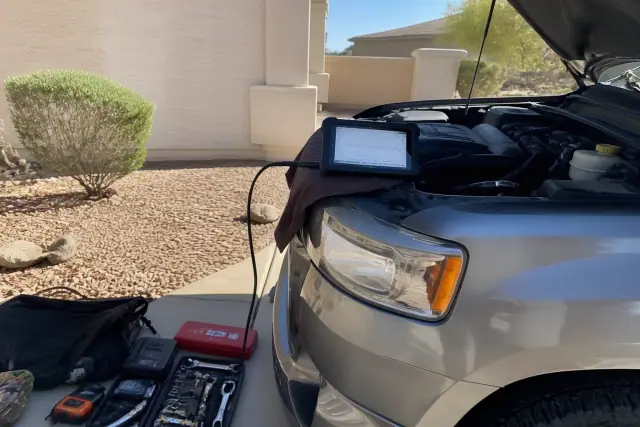
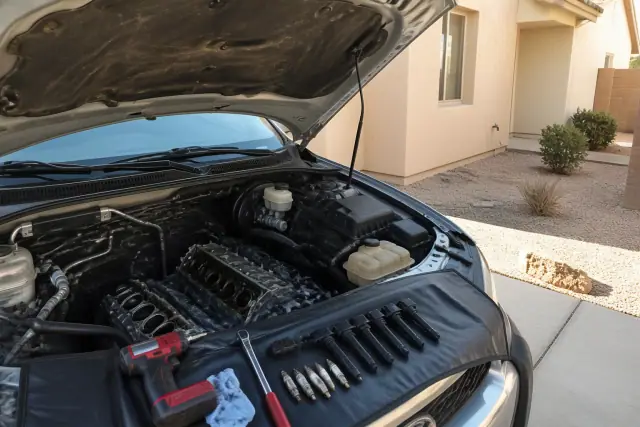
Mobile mechanic performing check engine light diagnostics on a car in a residential driveway in Surprise, AZ.

We pull stored and pending OBD2 codes, freeze-frame conditions, code history, and live sensor readings, then compare them with a physical inspection. Every gas-powered vehicle sold in the U.S. since 1996 uses the OBD-II standard, but the same P0300 code can require different interpretation on a 2009 Civic and a 2018 F-150 with 90,000 desert miles. The goal is to identify the root cause, not merely display a code number.

Explore Service

Brake Repair

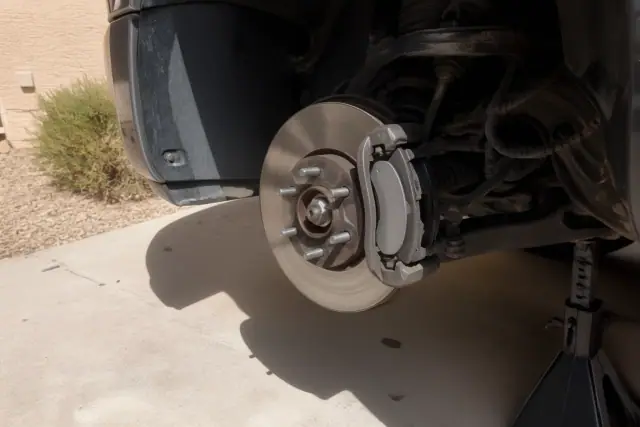
Mobile mechanic performing a brake repair with a removed wheel and new brake pads at a home in Surprise, AZ.

Mobile brake service includes pad and rotor replacement, caliper service, and brake fluid flushes at your location. Arizona heat and repeated stops on Grand Avenue or Litchfield Road can accelerate fluid degradation and pad wear, so we measure pad thickness and compare rotor condition with manufacturer minimum specifications before recommending replacement.

Explore Service

Car Battery Replacement

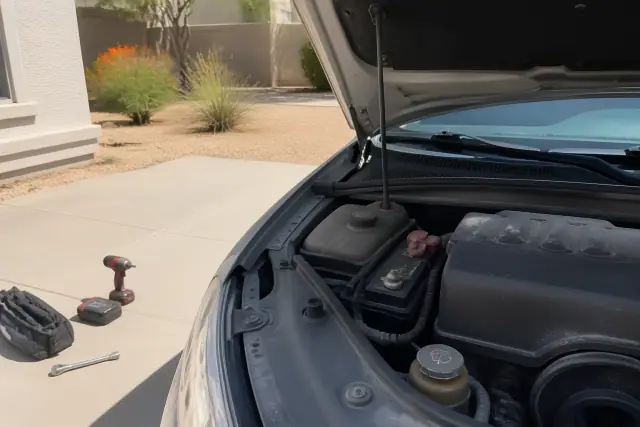
New car battery installed in a vehicle engine bay on a residential driveway in Surprise, AZ.

A battery rated for 5 years in a milder climate often lasts closer to 2-3 years in Surprise because sustained temperatures above 100 degrees accelerate internal corrosion and fluid loss. We test cranking amps and alternator charging output before installation, helping avoid a fresh battery masking a charging fault and failing again in six months.

Explore Service

Alternator Replacement

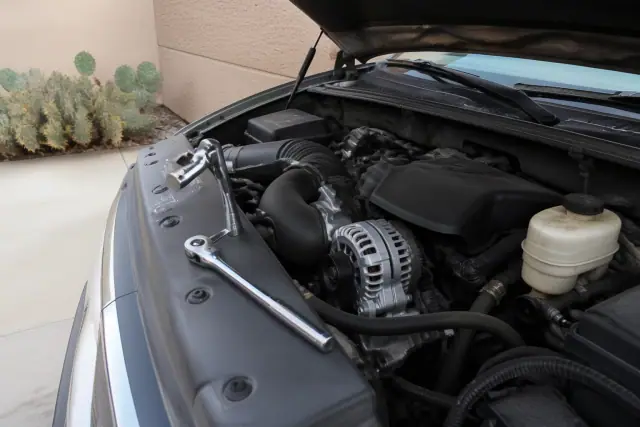
New alternator installed in an engine bay during a mobile mechanic service in a residential driveway in Surprise, AZ.

Dimming headlights, a battery warning light, or an engine that dies shortly after a jump can point to alternator failure. We load-test the charging system at the vehicle, rule out a weak battery or corroded ground strap, and install a replacement alternator matched to OEM output specifications when testing confirms the fault.

Starter Replacement

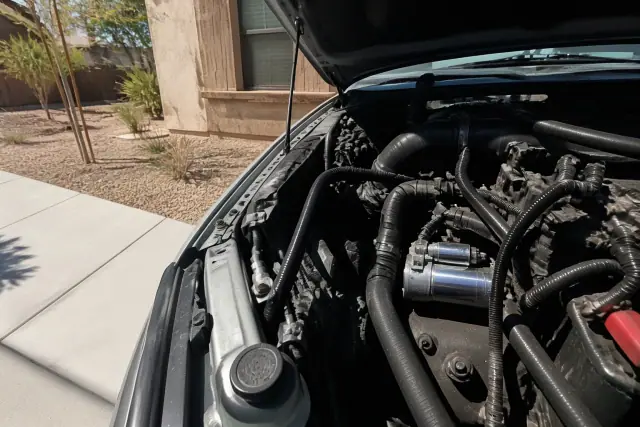
New car starter installed in a vehicle engine bay at a home driveway in Surprise, AZ.

Clicking, a slow crank, or silence when the key turns may involve the starter, battery, solenoid, or circuit. We test battery voltage under load along with the starter circuit and solenoid before replacing the motor, then perform the confirmed repair at your home or workplace without a tow.

Oil Change

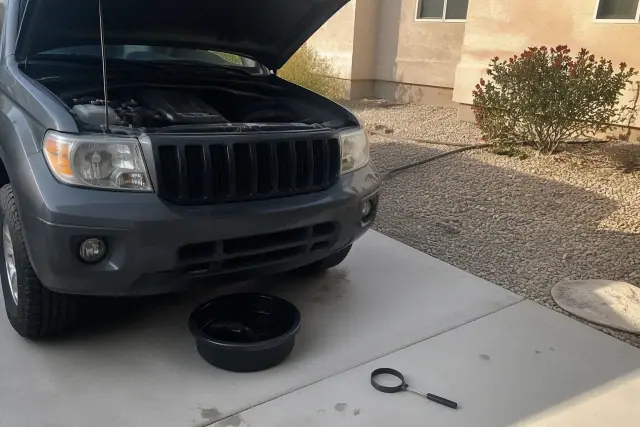
Mobile mechanic performing an oil change on a vehicle in a residential driveway in Surprise, AZ.

Extreme heat can break down conventional oil faster than moderate conditions, so synthetic oil is recommended for most vehicles driven daily in Surprise traffic. We follow the vehicle manufacturer's interval and filter specification, check other fluid levels, and dispose of used oil in line with Arizona Department of Environmental Quality guidelines.

AC Repair & Recharge

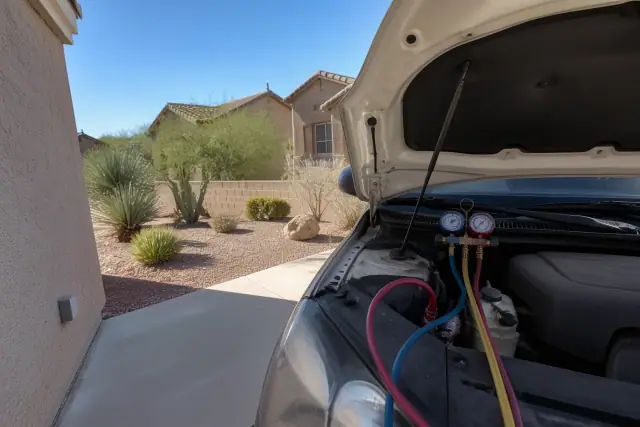
AC repair on a vehicle engine with manifold gauges on a driveway in Surprise, AZ.

When summer highs regularly exceed 110 degrees, weak air conditioning can become a safety concern. We diagnose refrigerant leaks, compressor failures, and clogged condensers, then recharge to the OEM-specified pressure with R-134a or R-1234yf according to the vehicle's factory specification.

Radiator & Cooling System Repair

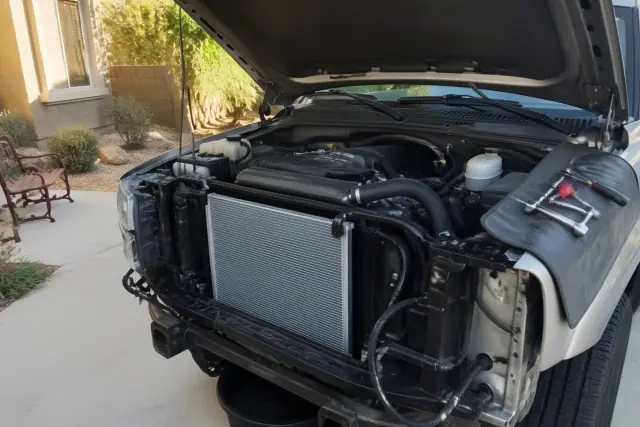
A technician performs a radiator and cooling system repair on a car in a residential driveway in Surprise, AZ.

Overheating calls are common on sun-exposed stretches of Loop 303 and Bell Road. We pressure-test the cooling system, inspect the radiator, hoses, thermostat, and water pump, and flush contaminated coolant that can no longer protect properly against boil-over in triple-digit heat.

Spark Plugs & Ignition Coil Replacement

Mobile mechanic performing spark plug and ignition coil replacement on a vehicle in a residential driveway in Surprise, AZ.

Worn spark plugs and weak ignition coils can cause rough idle, poor fuel economy, and cylinder misfire codes from P0301 through P0308. We test individual coil resistance and spark output, then install the correct copper, platinum, or iridium plugs at factory gap and torque specifications instead of replacing every coil blindly.

Pre-Purchase Car Inspection

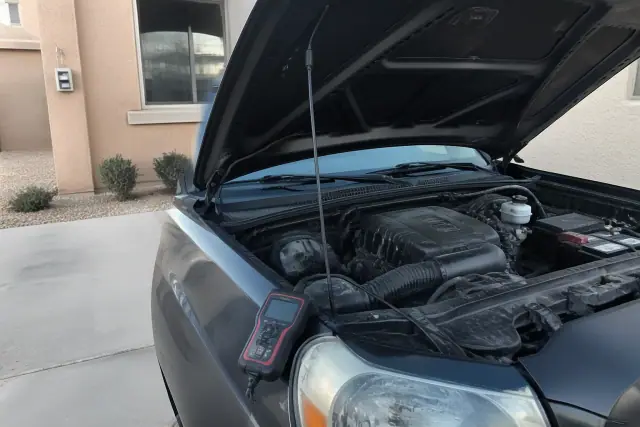
Mobile mechanic performing a car diagnostic scan with an OBDII scanner on a vehicle parked at a home in Surprise, AZ.

Before you buy a used vehicle, we scan for stored and pending codes and examine engine, transmission, brakes, suspension, cooling-system integrity, battery condition, and charging output. You receive a clear written rundown before signing, whether the vehicle is at a private seller's driveway or a lot on Bell Road.

Diagnostic Guidance

How to Choose Check Engine Light Diagnostics

A useful diagnostic visit should explain why the light came on, how urgent the condition is, and what evidence supports the proposed repair. Look for a service that can read manufacturer-specific information, compare live and stored data, inspect the related components, and provide clear findings before work begins.

Full Diagnostics, Not Just Code Reading

A basic scan identifies the stored code, but it does not prove which component caused it. Full diagnosis combines that code with freeze-frame conditions, live sensor readings, code history, technical service bulletins, and inspection results so the repair addresses the root cause.

Solid or Flashing Warning Light

A solid light often indicates a moderate issue that should be checked within days. A flashing light can indicate an active misfire, so pull over and arrange a scan rather than continuing to drive and risking catalytic-converter damage.

Manufacturer-Specific Vehicle Data

Under OBD-II, a P0 prefix marks a generic powertrain code, while a P1 prefix identifies a manufacturer-specific code. Accurate interpretation uses brand-level reference data and the vehicle's exact operating conditions rather than a one-size-fits-all code description.

Live Data and Physical Testing

Sensor voltage, fuel-trim percentages, coolant temperature, and RPM help show whether current operation matches the stored fault. A physical check of seals, hoses, wiring, plugs, coils, or sensor resistance then confirms which possible cause is actually present.

On-Site Repair Capability

A mobile appointment can combine testing and repair without a diagnostic trip followed by a second shop visit. When the fault and required part are confirmed and available, Phoenix Mobile Car Mechanic can often complete the repair during the same appointment.

Written Findings Before Work

Each diagnostic call includes a written explanation of the codes, the likely cause, and a repair estimate before work begins. That makes the recommendation easier to evaluate and prevents an unexpected line item after work is underway.

Surprise Warning-Light Issues

Common Check Engine Light Problems in Surprise

A check engine light can trace to ignition, emissions, airflow, vacuum, or electrical faults, and Surprise heat and dust add useful context to the diagnosis. Our mobile setup can evaluate oxygen sensors, catalytic-converter efficiency, EVAP faults, mass airflow readings, ignition misfires, vacuum leaks, EGR-valve behavior, and charging voltage without treating every warning light the same way.

Diagnose My Vehicle

Oxygen Sensor & Catalyst Codes

Sustained underhood heat can accelerate oxygen-sensor degradation, while an ignored misfire can damage the catalytic converter downstream. We compare sensor voltage and converter-efficiency data with the stored code before recommending either component.

EVAP Leaks & Gas Cap Faults

A loose or missing gas cap, a cracked cap seal, or a leak elsewhere in the evaporative-emissions system can trigger the light even when the car seems to drive normally. Dry heat makes rubber seals and hoses more prone to cracking, so we inspect the physical system instead of assuming the cap is the only cause.

Dust-Contaminated Airflow Sensor

Frequent Surprise dust storms can contaminate a mass airflow sensor and distort the engine's air measurement. Live airflow values, fuel trim, and a visual inspection help distinguish contamination from wiring trouble, an intake leak, or a sensor that has actually failed.

Spark Plug & Ignition Misfires

A P0300 random-misfire code or cylinder-specific P0301 through P0308 code may involve a worn plug, weak coil, wiring issue, vacuum leak, or another cause. We test individual ignition components and inspect related systems rather than replacing a complete set by default.

Heat-Cracked Vacuum Hoses

Dry desert heat can harden and split vacuum hoses, allowing unmetered air into the engine and causing lean codes, rough idle, or inconsistent performance. A hands-on hose inspection and live fuel-trim analysis can confirm a leak before parts are ordered.

Battery & Charging Voltage Faults

Irregular system voltage can confuse the engine control module and illuminate more than one warning indicator at once. Testing cranking performance, alternator output, terminals, and ground straps separates a battery problem from an alternator or connection fault.

Why Choose Us

Why Surprise Drivers Choose Phoenix Mobile Car Mechanic

Our service is built for drivers who cannot leave a vehicle at a shop for a full day or arrange a tow for an issue that can be evaluated on-site. We combine mobile convenience with professional OBD2 equipment, manufacturer-level reference data, written findings, and a repair estimate before work begins.

Mobile Convenience Across Surprise

We come to driveways, offices, parking lots, and roadside locations across Surprise and nearby West Valley communities. That model works for vehicles that sit between drives in Sun City as well as family SUVs collecting highway miles on Loop 303.

ASE-Trained, Heat-Aware Diagnosis

ASE-trained technicians use the same class of OBD2 equipment found in dealership service bays and interpret results with manufacturer-specific data. Familiarity with Surprise heat, dust, commuter mileage, and local failure patterns helps narrow the inspection without replacing parts by guesswork.

Repair Accountability

We stand behind the parts installed and the diagnostic conclusion provided. If a repair does not resolve the original trouble code, we return to reassess it at no additional diagnostic charge, keeping responsibility with the team that made the recommendation.

On-Site Diagnostic Process

Our Check Engine Light Diagnostic Process

A typical diagnostic takes 30 to 60 minutes before repair time, depending on the number of codes and whether the fault is active or intermittent. Each step moves from computer evidence to physical confirmation, then to a clear repair decision.

01.

Connect the OBD2 Scanner

The technician connects professional scan equipment to the vehicle's diagnostic port at your location. The initial system check shows which control modules report faults and whether several dash warnings may share one electrical cause.

02.

Retrieve Stored & Pending Codes

We collect stored and pending trouble codes, code history, and freeze-frame data showing engine conditions at the moment the fault occurred. That snapshot provides more direction than a code number viewed by itself.

03.

Analyze Live Sensor Data

Live oxygen-sensor voltage, fuel-trim percentages, coolant temperature, RPM, and other readings are compared with what the code suggests. Intermittent faults may require a test drive with the scanner connected so the condition can be captured under load.

04.

Inspect the Related Components

The technician checks the components relevant to the fault, such as a gas-cap seal, vacuum lines, spark plugs, ignition coils, wiring, or sensor resistance with a multimeter. This step tests the likely causes rather than treating the code as an automatic parts order.

05.

Review Findings & Repair Quote

Once the fault is isolated, we explain the evidence in plain language and provide the repair estimate before work starts. You can see what was found, why the repair is recommended, and what the appointment includes.

06.

Complete or Schedule the Repair

When the needed part is available, the repair can often be completed during the same visit. If the van does not carry the correct part, we source it and arrange a prompt follow-up instead of leaving the diagnosis unresolved.

Diagnostic Outcomes

What Mobile Diagnostics Can Reveal

Case Study 1: Misfire root cause: A cylinder code can be compared with coil resistance, spark output, plug condition, vacuum integrity, and live fuel trim to identify the failed component instead of replacing a complete ignition set.

Case Study 2: Charging-system fault: A battery light and check engine light appearing together can be evaluated through cranking-amp testing, alternator output, terminal condition, and ground-strap inspection before either major component is replaced.

Case Study 3: Emissions readiness: An illuminated check engine light causes an automatic failure in Maricopa County emissions testing, even if the vehicle seems to run normally. Diagnosing and repairing the fault early leaves time for the several-day drive cycle some repairs need before the computer reports ready status.

Get Clear Answers

Get Answers at Your
Vehicle in
Surprise

Tell us which warning light or symptom you are seeing and where the vehicle is located. Phoenix Mobile Car Mechanic will quote the diagnostic visit before dispatch and bring the equipment needed to evaluate the fault on-site, with same-day and weekend appointments available.

Mobile Mechanic Help

Check Engine Light FAQs for Surprise, AZ

These answers cover diagnostic pricing, warning-light urgency, emissions testing, mobile repairs, and service coverage in Surprise. For a vehicle-specific answer, describe the light, symptoms, and location when you call.

Call a Mobile Mechanic

A standard check engine light diagnostic is often roughly $120 to $235 at many shops, although vehicle complexity and the number of systems involved affect the price. Phoenix Mobile Car Mechanic quotes diagnostic pricing before dispatch, and the diagnostic cost typically applies toward the repair when you approve the fix during the same visit.

Several auto-parts retailers around Surprise offer a basic code scan at no charge. That can reveal the stored number, but it generally does not include live-data analysis, freeze-frame review, physical inspection, or confirmation of the root cause.

No. Maricopa County's emissions program checks onboard diagnostic status, and an illuminated malfunction indicator lamp causes an automatic failure regardless of how the vehicle seems to run. Some repairs require a drive cycle of several days before ready status returns, so schedule diagnosis before the registration test date.

A standard diagnosis typically takes 30 to 60 minutes, with repair time added afterward. A straightforward active fault may be confirmed quickly, while an intermittent or multi-system problem can take longer and may require a test drive with the scanner connected.

No. Code reading retrieves the number stored by the computer, while a full diagnostic compares that code with live sensor data, freeze-frame conditions, code history, manufacturer information, and physical inspection. That additional work is what identifies why the fault occurred and which repair is justified.

Pull over safely and arrange a diagnostic scan rather than finishing the drive. A flashing light can indicate an active misfire capable of damaging the catalytic converter within minutes, while a solid light more often indicates a moderate issue that should be checked within days.

Often, yes. Once testing isolates the fault, Phoenix Mobile Car Mechanic can quote and complete many repairs during the same appointment when the correct part is on the van; otherwise, the part is sourced and a follow-up is scheduled.

Yes, the mobile diagnostic equipment can read ABS, transmission, and airbag fault codes when those systems report warnings. Checking several illuminated indicators together can reveal a shared cause, such as irregular alternator output affecting both the battery light and engine controls.

A battery rated for 5 years elsewhere often lasts closer to 2-3 years in Surprise summers because sustained temperatures above 100 degrees accelerate internal corrosion and fluid loss. Testing both cranking amps and alternator output helps confirm whether the battery or charging system is responsible.

Service starts by checking for refrigerant leaks, compressor faults, and condenser restrictions. If recharge is appropriate, the system is filled to OEM-specified pressure with R-134a or R-1234yf based on the vehicle's factory specification.

We evaluate pad thickness, rotor condition against manufacturer minimum specifications, caliper operation, and brake-fluid condition before recommending work. Available on-site repairs include pad and rotor replacement, caliper service, and fluid flushes.

The inspection covers engine and transmission condition, stored and pending trouble codes, brakes, suspension, cooling-system integrity, battery condition, and charging output. You receive a written rundown before committing to the used vehicle.

Coverage includes Surprise neighborhoods such as Marley Park, Asante, Grand at Surprise Farms, Sierra Montana, Rancho Gabriela, Sun Village, Ashton Ranch, and Desert Oasis. Service also extends to Sun City, Sun City West, El Mirage, Youngtown, Waddell, Litchfield Park, Peoria, and Glendale, with most Surprise addresses inside the standard area and no extra travel charge.

Yes, same-day and weekend appointments are available, and most Surprise locations can be reached the same day. Timing depends on the current job load and your position within the service radius, while early-morning and weekend slots can fill quickly during peak summer demand.

If a repair does not resolve the original trouble code, Phoenix Mobile Car Mechanic returns to reassess the issue at no additional diagnostic charge. The follow-up focuses on the original code and the conclusion reached during the first appointment.