Proudly serving Phoenix, Glendale, Scottsdale, Tempe, Mesa, Chandler & surrounding areasCall or Text 24/7: 480-210-2603

Mobile Radiator & Cooling System Repair & Leak Inspection in Phoenix, AZ

Phoenix Mobile Car Mechanic provides on-site radiator and cooling system repair throughout Phoenix and the surrounding metro. We also handle check engine light diagnostics, brake repair, car battery replacement, alternator replacement, and starter replacement. Our mobile services also include oil changes, AC repair and recharge, spark plug and ignition coil replacement, and pre-purchase car inspections.

Summer pavement temperatures in the Salt River Valley regularly climb past 150 degrees, while ambient temperatures can remain between 104-110°F for weeks. Heat soak in stop-and-go traffic on I-10, I-17, and Loop 101 can turn a weak thermostat or marginal radiator into an overheating vehicle quickly. We bring pressure testing, flow diagnostics, leak-detection tools, and the correct coolant to your location. That lets us identify the failed component before recommending a repair.

We work at your driveway, office lot, or roadside location so you do not have to drive an overheating vehicle across town. Most radiator repairs can be completed without a tow truck.

Phoenix Mobile Car Mechanic provides mobile radiator and cooling system repair across Phoenix and the surrounding metro, including Scottsdale, Tempe, Mesa, Glendale, Chandler, and Peoria.

★ ★ ★ ★ ★4.9/5 Average Rating · 20+ Years of Experience · Thousands of Customers Helped · Licensed & Insured · Residential & Commercial

Radiator Cooling System Options & Benefits

What Is Mobile Cooling System Repair?

Mobile radiator and cooling system repair identifies leaks, restrictions, airflow problems, and failing components at the vehicle's location. The service can include diagnostics, hose or cap repair, thermostat or water pump work, radiator cleaning, coolant flushing, radiator repair, or complete replacement.

Phoenix spans 517.9 square miles, and vehicles travel long distances across a metro footprint of 5.19 million residents. Desert heat, extended commutes, and heavy freeway mileage place sustained thermal stress on radiators, hoses, thermostats, water pumps, and cooling fans.

A car radiator is one part of a larger system that circulates coolant and releases engine heat. We evaluate the radiator core, cap, hoses, thermostat, water pump, fan, and coolant condition together so the repair addresses the actual failure point.

Benefits of Mobile Cooling System Repair

An on-site diagnostic protects the engine from additional overheating while giving the technician the tools and vehicle-specific information needed to make a focused repair.

  • Service at a driveway, office lot, or roadside location
  • Pressure testing and UV-dye tracing before parts replacement
  • OAT, HOAT, or conventional green coolant matched to the vehicle
  • Refractometer testing for coolant concentration
  • Infrared hot-spot checks across the radiator core
  • Vacuum-fill equipment that helps eliminate trapped air
  • OBD-II coolant-temperature data read directly from the ECU
  • A final pressure test and road test after the repair
Mobile Cooling Services

Radiator & Cooling System Services

Our mobile bay supports leak detection, component repair, coolant flushing, radiator replacement, thermostat and water pump service, cleaning, recoring, pressure testing, and performance-oriented cooling upgrades.

Radiator Leak Detection & Repair

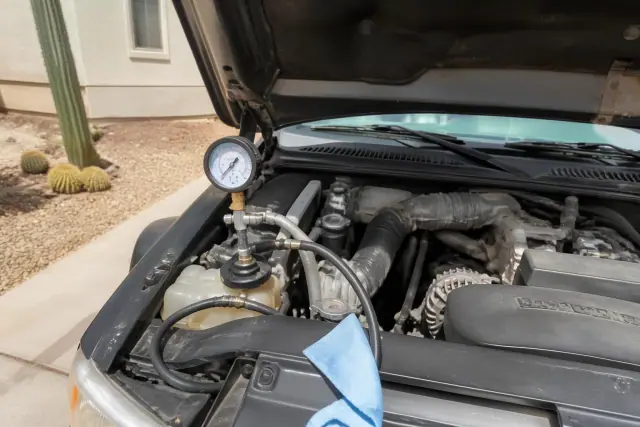
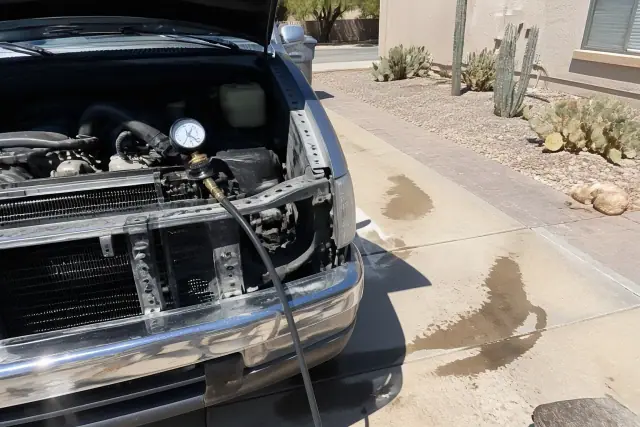
Technician performing a radiator cooling system leak test on a vehicle engine in Phoenix, AZ.

We combine pressure testing with UV dye to locate leaks at the core, seams, hose connections, cap seal, drain plug, and water pump weep holes. Hairline leaks that leave no puddle can often be seen under UV light within minutes.

Request Estimate

Cooling System Flush & Coolant Replacement

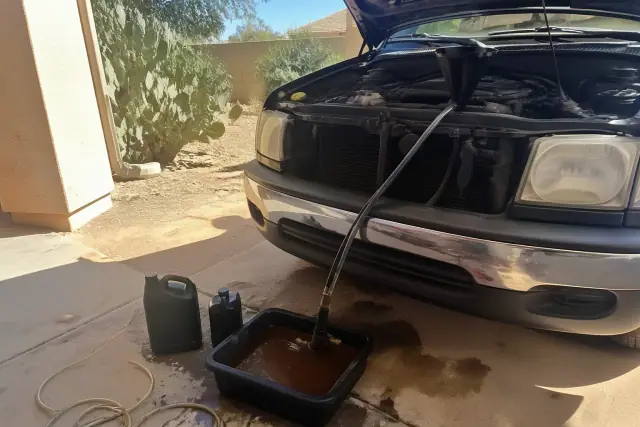
Car coolant replacement and radiator flush on a vehicle parked on a concrete driveway in Phoenix, AZ.

A full flush removes old coolant, rust, scale, and sludge from the radiator, water pump housing, and heater core. We refill with the manufacturer-specified formulation instead of mixing incompatible coolants that can accelerate corrosion.

Request Estimate

Radiator Replacement & Recoring

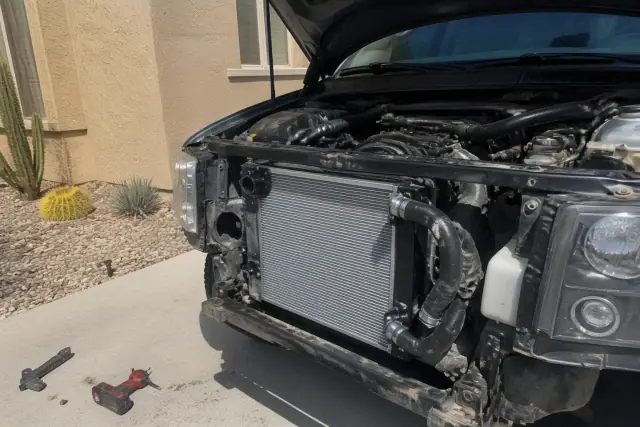
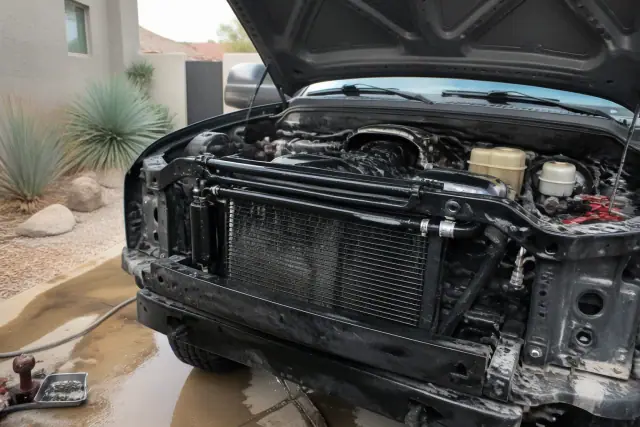
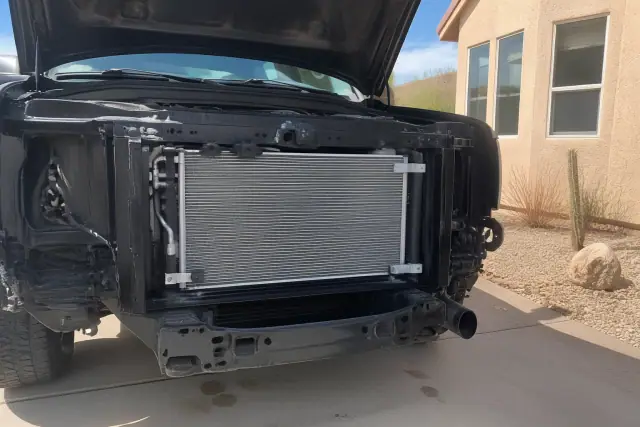
Radiator replacement in progress on a vehicle engine in a residential yard in Phoenix, AZ.

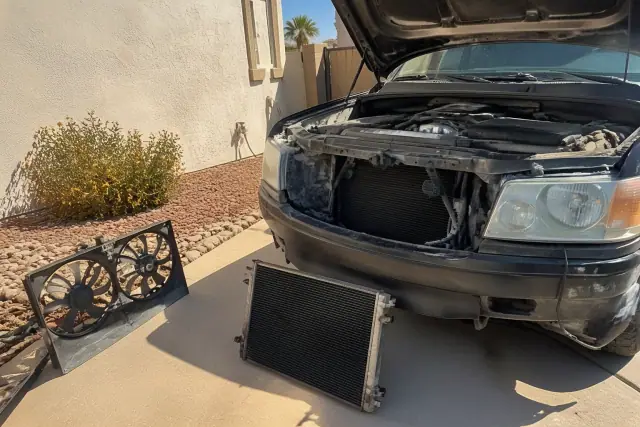
Replacement is appropriate when a core has multiple leaks, extensive corrosion, or broad fin damage. Recoring can preserve the original tanks and brackets on older or specialty vehicles when an original-equipment radiator is no longer readily available.

Request Estimate

Thermostat & Water Pump Service

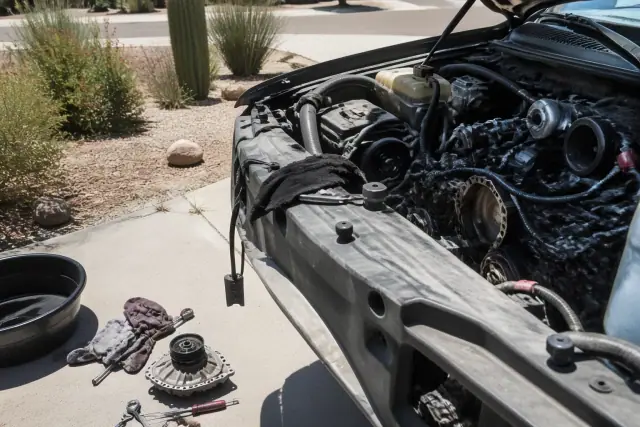
Technician performing a radiator cooling system repair with a water pump and thermostat in a driveway in Phoenix, AZ.

We test thermostat operation and inspect its housing and gasket for slow leaks. Water pump checks focus on bearing noise, coolant near the front of the engine, seal condition, and circulation problems.

Request Estimate

Pressure Testing & Hidden-Leak Diagnostics

Technician performing a radiator pressure test on a car at a residential driveway in Phoenix, AZ.

Pressure loss can reveal a leak even when the driveway is dry. We also check for combustion gases in the coolant, oil contamination, and exhaust odor at the reservoir before treating the radiator as the cause.

Request Estimate

Radiator Cleaning & Performance Upgrades

Technician cleaning a vehicle radiator and installing performance hoses at a home in Phoenix, AZ.

External cleaning clears bugs, dust, and fine desert grit from the fins, while internal flushing removes deposits that restrict flow. Vehicles used for towing, desert off-roading, or sustained highway driving may also benefit from a properly fitted higher-capacity aluminum radiator.

Request Estimate
Repair & Replacement Options

Cooling System Repair Options

The right approach depends on the leak location, core condition, coolant contamination, component fit, and how the vehicle is used. These options cover focused repairs, correct fluid service, full replacement, restoration, and added cooling capacity.

Radiator cooling system leak repair components installed in a vehicle engine bay at a job site in Phoenix, AZ.

Leak Repair Components

A contained leak may be repairable without replacing the complete radiator. We confirm the source and choose a repair that matches the component material and severity.

  • Radiator hose replacement
  • Hose clamp replacement
  • Radiator cap and seal replacement
  • Epoxy or solder repair on metal-core radiators
  • Welding repair for heavy-duty tanks or seams
Request Estimate
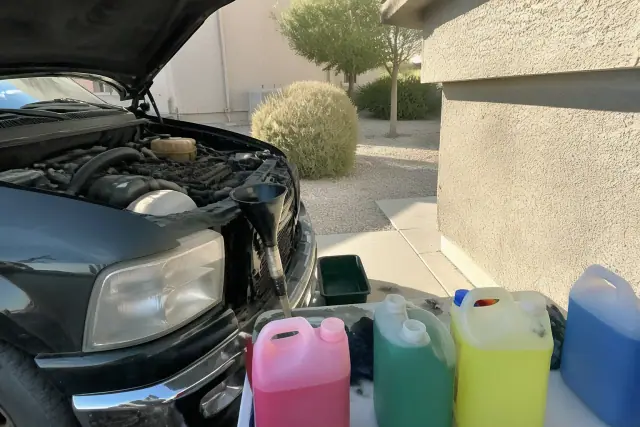
Car engine with coolant jugs, funnel, and drip tray on a concrete pad at a Phoenix, AZ home.

Coolant Flush & Refill Choices

Coolant chemistry must match the engine and radiator materials. We check the owner's manual specification or VIN before filling the system.

  • OAT coolant where specified
  • HOAT coolant where specified
  • Conventional green antifreeze where specified
  • Clean-water or flush-solution system cleaning
  • Manufacturer-specified refill and air bleeding
Request Estimate
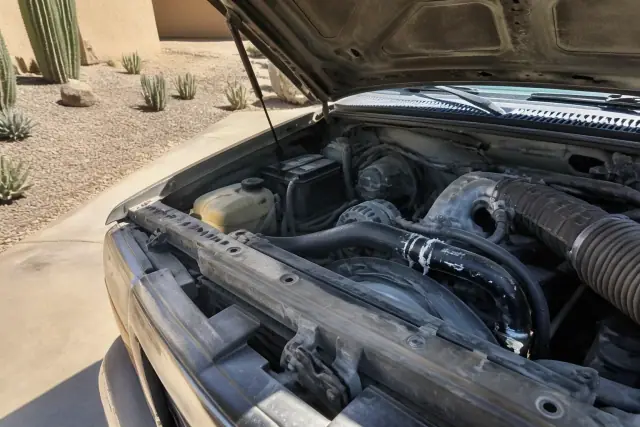
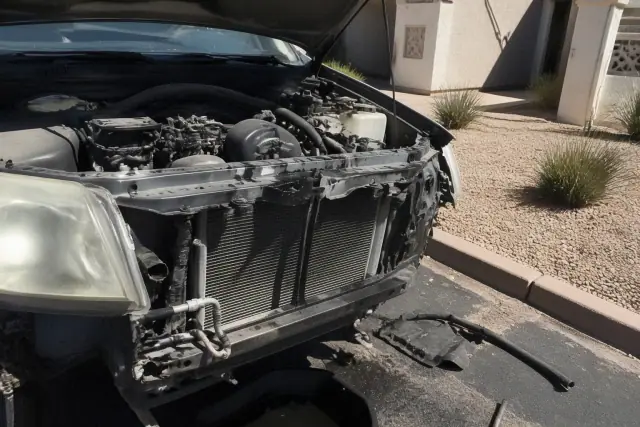
A vehicle with its hood open for radiator replacement in a residential yard in Phoenix, AZ.

Radiator Replacement Options

A complete replacement becomes the practical choice when repeated repairs would leave extensive corrosion, multiple leak points, or too little usable fin area. Exact fitment matters to cooling performance.

  • A new complete radiator with the parts manufacturer's warranty
  • A recored radiator using the original tanks and brackets
  • Correct plastic end-tank and core configuration
  • Matching in-radiator transmission cooler connections
  • Verified shroud fit and cooling-fan clearance
Request Estimate
Mechanic repairing a radiator cooling system in an apartment parking lot in Phoenix, AZ.

Cleaning & Restoration Services

Cleaning can restore airflow and coolant contact when the radiator is structurally sound. Restoration and recoring serve classic vehicles, work trucks, and equipment whose original radiators are difficult to replace.

  • Bug and road-debris removal from radiator fins
  • Fine desert dust and grit removal
  • Internal scale, rust, and sludge flushing
  • Heater-core and radiator flow restoration
  • Heavy-duty and commercial radiator service near Sky Harbor and the I-17/I-10 interchange
Request Estimate
Vehicle with its hood raised for radiator repair on a concrete pad at a home in Phoenix, AZ.

Performance Cooling Options

Vehicles that tow, travel off-road in the surrounding desert, or commute daily in extreme heat may need more cooling capacity than a marginal original radiator can provide.

  • Upgraded aluminum-core radiator construction
  • Increased fin density for greater heat-transfer area
  • Larger core volume for demanding vehicle use
  • Exact mounting dimensions for proper shroud airflow
  • Reduced strain on the water pump and cooling fan
Request Estimate
Finding the Right Repair

Choosing the Right Cooling System Approach

We compare the confirmed failure point with the radiator's overall condition, fitment, repair history, and vehicle use. A single hose, cap, gasket, or contained metal-core leak may justify repair, while widespread corrosion, repeated patches, or broad fin damage can make replacement the better value. You receive a firm quote before work starts.

Mobile Service at Your Location

We bring the mobile bay to your home, workplace, or roadside location. That keeps you from driving an overheating engine farther and risking warped cylinder heads or a blown head gasket.

Diagnosis Before Parts Replacement

A warning light alone does not identify the failed part. Pressure, flow, temperature, UV-dye, and combustion-gas checks help separate radiator faults from hose, thermostat, water pump, fan, sensor, or head-gasket problems.

Vehicle-Specific Coolant & Fitment

We match coolant chemistry and replacement dimensions to the specific make and model. The process includes checking the manual specification or VIN, radiator brackets, transmission cooler connections, fan clearance, and shroud fit.

What Sets Us Apart

Why Choose Us for Cooling System Repair?

Our technicians carry ASE-level training on modern cooling-system architecture, including electric fan controls and plastic end-tank radiators found on many Toyota, Honda, and Ford vehicles in the valley. The mobile bay brings shop-style diagnostic equipment to the vehicle, and our quote is provided before repair work begins.

Request an Inspection

Engine Overheating in Phoenix Heat

Overheating calls are especially common from May through September. Ambient temperatures above 105°F and heat soak after highway driving can push a marginal cooling system into the red zone within minutes of idling.

Radiator Leaks & Coolant Loss

A sweet smell, a puddle under the front of the vehicle, a low-coolant warning, or white residue around a hose connection can indicate a leak. Arizona UV exposure and heat cycling also wear rubber hoses and plastic end tanks.

Stuck Thermostat

A thermostat stuck closed can cause rapid overheating. One stuck open can keep the engine too cool to reach an efficient operating temperature, while a leaking housing gasket can create slow coolant loss.

Water Pump Failure

Water pump bearing wear often produces a high-pitched whine. Coolant near the front of the engine or at the pump's weep hole can indicate a seal or pump failure.

Cooling System Blockages & Corrosion

Hard-water minerals and neglected coolant can form scale and rust inside the radiator and heater core. Restricted flow creates localized hot spots and contaminated coolant can wear the water pump seal.

Radiator Fin & Airflow Damage

Road debris can bend or crush radiator fins and reduce the surface area available for heat dissipation. Widespread fin damage, poor shroud alignment, or insufficient fan clearance can keep airflow from moving through the core correctly.

How It Works

Our Cooling System Repair Process

Every job begins with a real diagnostic instead of a guess based on the temperature gauge or warning light. Once the failure point is confirmed, we explain the appropriate repair, replacement, flush, or cleaning option before proceeding.

01.

Coolant & Cap Inspection

We check coolant level and condition, verify the radiator cap's seal and pressure rating, and inspect the radiator, hoses, clamps, thermostat housing, water pump, and cooling fan.

02.

Pressure & Combustion-Gas Testing

We pressure-test the cooling system to 15 psi, or to factory specification on European and diesel platforms, and use UV dye where needed. A combustion-gas check helps rule out a blown head gasket before radiator parts are recommended.

03.

Drain Coolant & Inspect Components

Old coolant is drained and safely disposed of according to Arizona Department of Environmental Quality guidelines. We then remove and inspect the radiator, hoses, clamps, thermostat, and fan as the confirmed repair requires.

04.

Repair or Replace the Failed Part

The confirmed failure may call for a core, hose, clamp, cap, thermostat, water pump, fan, or complete radiator repair or replacement. The selected work follows the component's condition, material, fit, and leak severity.

05.

Refill & Bleed the System

We refill with the specified OAT, HOAT, or conventional green coolant and remove trapped air. A vacuum-fill system helps establish a complete fill before the engine returns to operating temperature.

06.

Verify the Repair & Road Test

The system is pressure-tested again to confirm it holds. We road-test the vehicle and recheck temperature-gauge behavior before finishing the service.

Mobile Cooling System Help

Schedule Mobile Cooling System Service

If the temperature gauge is climbing, coolant is disappearing, or the radiator is not shedding heat, tell us where the vehicle is and what you have noticed. We can bring the diagnostic equipment and coolant-service tools to your Phoenix-area location.

Cooling System Help

Cooling System Repair FAQs

These answers cover common questions about radiator leaks, coolant service, diagnostics, replacement decisions, and mobile repairs in Phoenix.

Call Our Technicians

A radiator leak repair runs about $150 to $400 in most cases. Coolant-leak repairs at the water pump or radiator can run $300 to $1,000 depending on labor complexity, while full radiator replacement is typically $850 to $1,400 installed at independent shops and may be higher on luxury vehicles. We provide a firm quote before starting work.

A full antifreeze coolant replacement is recommended every 24,000 to 36,000 miles or every 2 to 3 years, whichever comes first. Vehicles using extended-life coolant may have a longer manufacturer-specified interval.

Common signs include a sweet smell, a visible puddle under the front of the vehicle, a low-coolant warning, or white residue around hose connections. A small leak may appear only when the system is pressurized and traced with UV dye.

Yes. Phoenix Mobile Car Mechanic works at driveways, office lots, and roadside locations across Phoenix and the surrounding metro, including Scottsdale, Tempe, Mesa, Glendale, Chandler, and Peoria.

The system is pressurized to the vehicle's factory specification, typically 14-16 psi, and monitored for a pressure drop over several minutes. A drop indicates a leak even when no puddle is visible.

A single hose, gasket, cap, cracked plastic tank, or contained metal-core leak may be repairable. Multiple core leaks, extensive corrosion, widespread fin damage, or a radiator repaired more than once usually make replacement the more practical choice.

Not every coolant is interchangeable. Mixing incompatible OAT, HOAT, and conventional green formulations can accelerate corrosion in aluminum radiators and engine blocks, so we check the owner's manual specification or VIN before refilling.

A stuck-closed thermostat can make the engine overheat rapidly. A stuck-open thermostat can keep it from reaching efficient operating temperature, and a leaking thermostat housing can cause slow coolant loss.

A high-pitched whine can indicate water pump bearing wear. Coolant near the front of the engine or at the pump's weep hole can point to a failing seal or pump.

We check for combustion gases in the coolant, oil contamination, and exhaust odor from the coolant reservoir. Those findings can identify an internal leak or head-gasket problem that would not leave an external puddle.

External cleaning removes bugs, dust, and fine desert grit that block airflow through the fins. An internal flush removes scale and sludge that restrict coolant flow and create hot spots.

An upgraded aluminum-core radiator may help vehicles used for towing, desert off-roading, or sustained highway commuting in extreme heat. Fitment, core volume, fin density, shroud alignment, and fan clearance all need to be checked before installation.

Most radiator-hose repairs, thermostat replacements, and coolant flushes are completed the same day once the technician is on site. The mobile bay carries parts and coolant formulations for many common vehicles on Phoenix roads.