Proudly serving Phoenix, Glendale, Scottsdale, Tempe, Mesa, Chandler & surrounding areasCall or Text 24/7: 480-210-2603

Mobile Starter Replacement & Starting System Diagnostics in Phoenix, AZ

Phoenix Mobile Car Mechanic provides mobile starter replacement and starting-system diagnosis throughout Phoenix, Arizona. We work at driveways, office lots, and roadside pullouts, bringing diagnostic tools and replacement parts to the vehicle. Our mobile services also include battery and alternator replacement, brake repair, check engine light diagnostics, cooling-system and AC service, spark plug and ignition coil replacement, oil changes, and pre-purchase inspections. Each visit begins with testing so we can separate a failed starter from battery, cable, alternator, ignition-switch, or fuel-delivery problems.

Phoenix heat is hard on starter motors, solenoids, and wiring: summer pavement temperatures can pass 150 degrees, while parked-cabin temperatures rise well above 140 degrees. Failures often surface during July and August, when monsoon humidity joins triple-digit engine-bay heat. Rather than replace parts on a hunch, we use a digital multimeter, load tester, voltage-drop test, and current-draw test to confirm the cause. That diagnosis helps you pay for the repair the vehicle actually needs.

We offer OEM and quality aftermarket starter motors built to SAE J1171 and J1211 electrical performance standards. Before installation, we explain the available part, manufacturer-specific warranty terms, and separate parts-and-labor quote.

Phoenix Mobile Car Mechanic provides mobile starter replacement in Phoenix and across the greater metro area, including Tempe, Scottsdale, Mesa, Chandler, Glendale, Ahwatukee, and Sunnyslope.

★ ★ ★ ★ ★4.9/5 Average Rating · 20+ Years of Experience · Thousands of Customers Helped · Licensed & Insured · Residential & Commercial

Starter Replacement Services & Benefits

What Is a Starter Motor?

A starter is a compact, high-torque electric motor mounted to the engine block or transmission housing. Its job is to turn the engine fast enough to begin the combustion cycle.

Turning the key or pressing the start button sends a low-amperage signal to the solenoid. The solenoid closes the high-amperage battery circuit, allowing the starter motor's pinion gear to engage the flywheel ring gear and crank the engine.

Even with a charged battery and working alternator, the vehicle cannot move if the starter cannot crank the engine. In a city with more than 1.6 million residents spread across 517.9 square miles, a no-start in a Maryvale parking lot or near the I-10/I-17 Stack can quickly become a safety concern.

Benefits of Mobile Starter Replacement

A mobile visit combines starting-system testing, part selection, replacement, and final checks at the vehicle's location. The goal is a confirmed repair without the tow, waiting room, or unnecessary part replacement.

  • Electrical testing before parts are ordered
  • Driveway, office-lot, or roadside service
  • No tow or shop waiting room
  • OEM and aftermarket options explained upfront
  • Parts and labor quoted separately
  • SAE J1171 and J1211 starter options
  • Electrical connections tightened to factory specifications
  • Multiple normal and hot-idle restart checks
Mobile Starter Services

Phoenix Starter Replacement Services

Starting symptoms overlap, so service begins with the whole electrical starting system rather than one assumed part. We test, identify the fault, explain the appropriate repair, and complete supported work at the vehicle.

Starter System Diagnosis

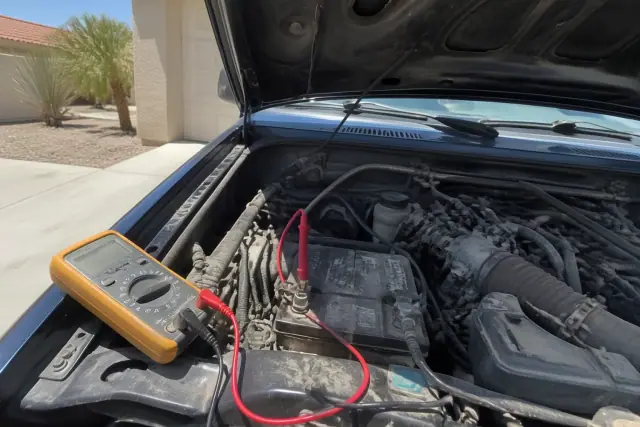
Technician using a multimeter to diagnose a starter on a vehicle in a residential driveway in Phoenix, AZ.

We listen to the starting sound, inspect cables and terminals, load-test the battery, measure voltage drop, and check starter current draw. Those results distinguish an internal starter failure from weak voltage or resistance elsewhere in the circuit.

Request Estimate

Mobile Starter Replacement

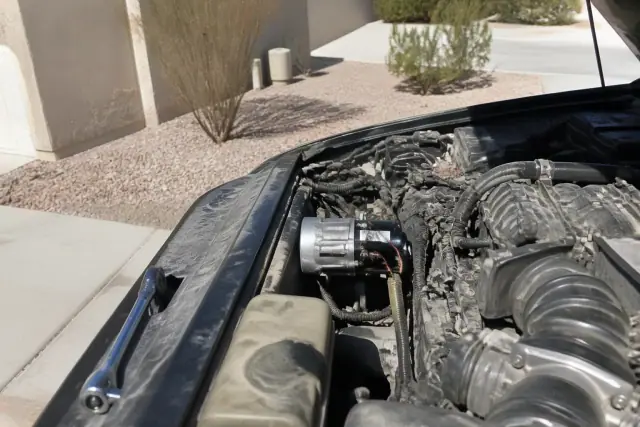
A new starter motor installed in a vehicle engine bay on a residential concrete pad in Phoenix, AZ.

Once testing confirms the starter, we bring the replacement to your driveway, workplace, or roadside location and complete the swap on-site. Most jobs are completed the same day after diagnosis because common OEM and aftermarket units are stocked for frequently serviced vehicles.

Request Estimate

Battery vs. Starter Testing

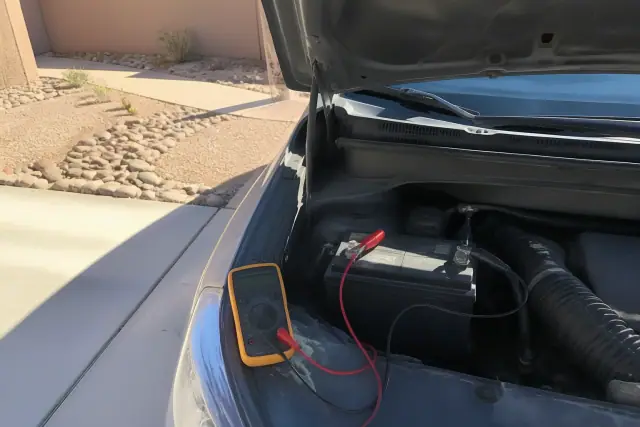
Digital multimeter connected to a vehicle battery during a starter test in Phoenix, AZ.

The battery stores cranking energy, the alternator replenishes it while the engine runs, and the starter consumes it to turn the engine. A combined battery-and-starter check with a load tester and amp clamp can separate those three systems in about fifteen minutes.

Request Estimate

Solenoid, Relay & Switch Checks

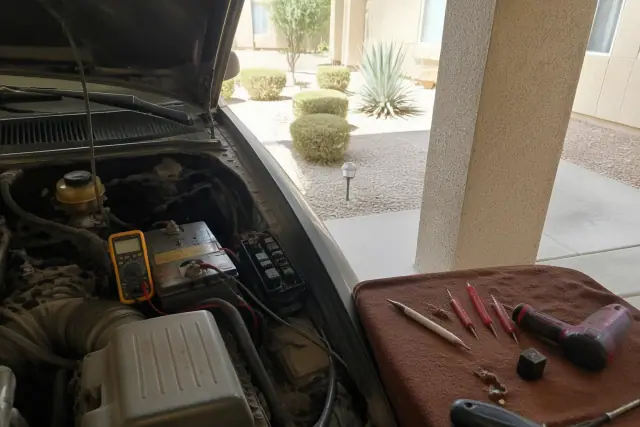
Multimeter testing a starter relay and engine components in a residential carport in Phoenix, AZ.

A no-start can come from the starter solenoid, starter relay, ignition switch, or neutral safety switch. We check these control points before calling for a full starter replacement.

Request Estimate

Pinion Gear & Engagement Repair

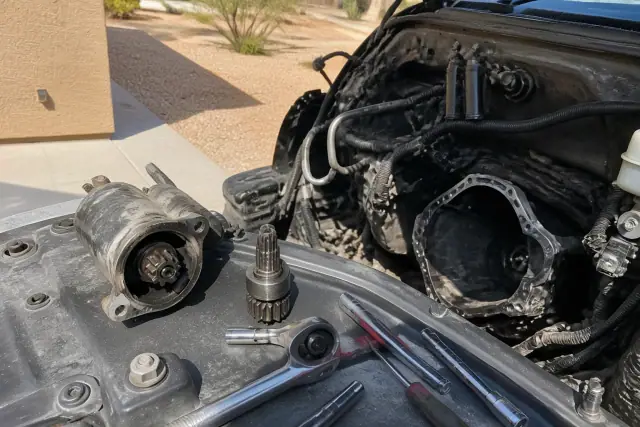
Starter motor pinion gear repair on a vehicle engine in Phoenix, AZ, with tools on a residential concrete pad.

Grinding during startup can indicate a worn or chipped pinion gear that is not meshing cleanly with the flywheel ring gear. Depending on the condition, a rebuilt starter may resolve the engagement problem without requiring a completely new unit.

Request Estimate

Starting & Charging System Repair

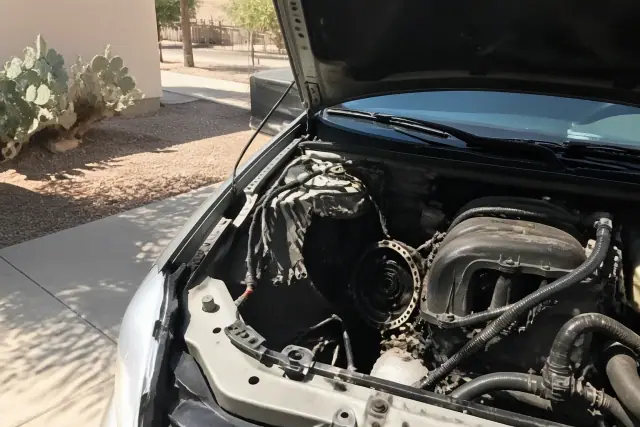
Starter replacement on a vehicle in a Phoenix, AZ driveway with engine bay components exposed under bright sunlight.

We evaluate the starter, alternator, and battery as one system because a weak alternator can leave the battery undercharged and imitate starter trouble. Corroded cables and loose ground connections are checked as part of that same diagnosis.

Request Estimate
Parts and Repair Paths

Starter Motor Options

The right approach depends on the diagnosed fault, vehicle design, starter access, and your choice between available OEM, aftermarket, or rebuilt units. We explain the part grade and manufacturer-specific coverage before installation.

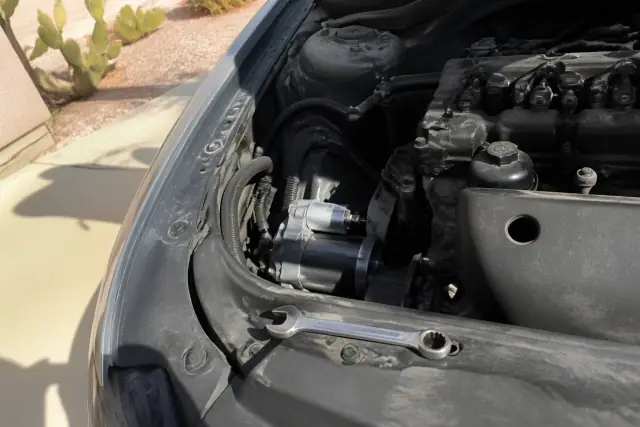
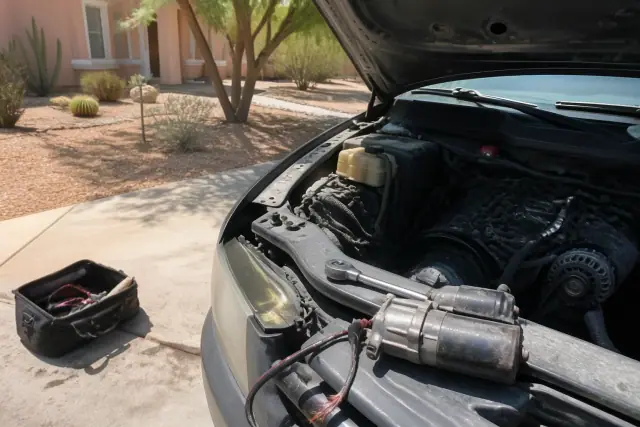
OEM starter motor installed in a vehicle engine bay with a wrench nearby on a sunny day in Phoenix, AZ.

OEM Starter Motors

An OEM starter is selected for the vehicle's make, model, and starting-system requirements. We review availability, price, and the manufacturer's specific coverage before ordering.

  • Matched to the vehicle application
  • SAE J1171 and J1211 performance standards
  • Installed to factory torque specifications
  • Manufacturer-specific coverage explained
  • Final normal and hot-idle start testing
Request Estimate
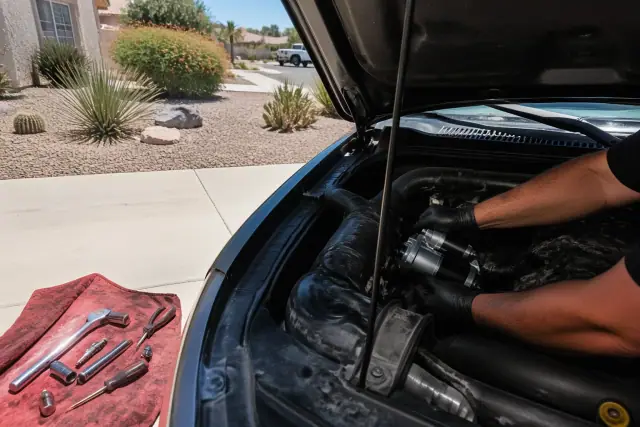
Technician installing a quality aftermarket starter in a vehicle engine bay at a home in Phoenix, AZ.

Quality Aftermarket Starters

A quality aftermarket starter can provide another vehicle-compatible replacement path. We compare it with the OEM option before parts are ordered so the choice and quote are clear.

  • Vehicle-compatible part selection
  • Electrical performance standards reviewed
  • Part grade discussed before ordering
  • Separate parts-and-labor quote
  • Coverage varies by manufacturer
Request Estimate
A rebuilt starter installed in a vehicle engine bay at a residential home driveway in Phoenix, AZ.

Rebuilt Starter Options

A rebuilt unit may be appropriate when the diagnosed issue involves a repairable starter assembly, such as pinion-gear wear. Testing determines whether this path fits the fault and vehicle.

  • Useful for some repairable assemblies
  • Considered after current-draw testing
  • Grinding may indicate pinion-gear wear
  • Pinion and ring-gear engagement matters
  • Part condition guides the recommendation
Request Estimate
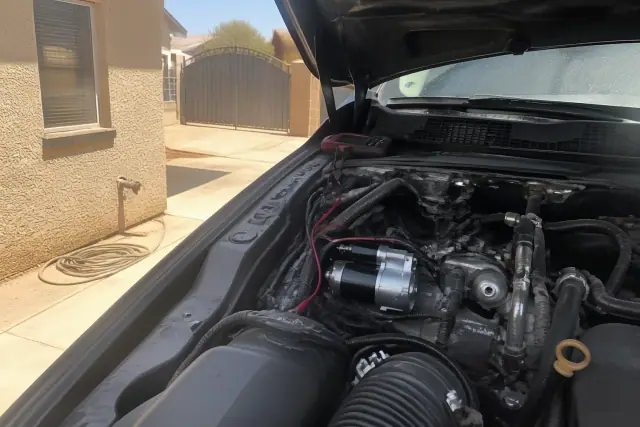
Exposed starter motor with frayed electrical wires on a car in a Phoenix, AZ residential driveway.

Solenoid & Circuit Faults

Not every failure requires the starter motor itself. The solenoid, cables, ground strap, relay, and starting-control switches can produce similar symptoms.

  • Worn starter solenoid
  • Corroded battery cables
  • Loose or resistant ground strap
  • Starter relay or ignition switch fault
  • Neutral safety switch fault
Request Estimate
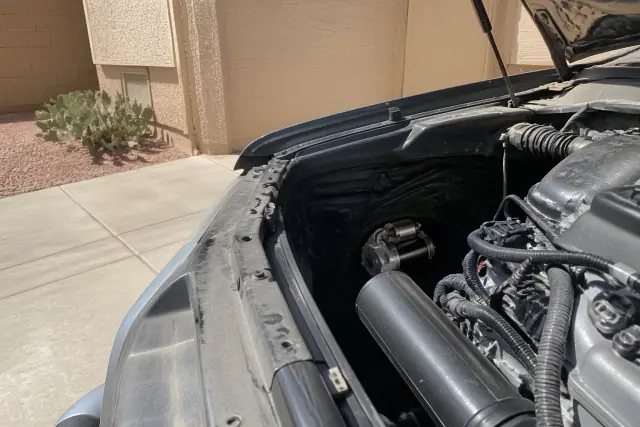
New starter motor and wiring harness installed in a vehicle engine bay at a residence in Phoenix, AZ.

Vehicle-Specific Starter Access

Starter location changes the work involved. Some units are reached from underneath or through the engine bay, while others sit behind the intake manifold, exhaust components, transmission housing, or related structures.

  • Under-vehicle access
  • Engine-bay access
  • Behind-intake-manifold placement
  • Transmission-housing placement
  • Access affects labor time and price
Request Estimate
Test Before You Replace

Choosing the Right Starter Approach

A full starting-system test shows whether the vehicle needs a new starter, a rebuilt unit, a solenoid-related repair, a battery, an alternator, or attention to a cable or connection. That evidence shapes the part recommendation instead of symptoms alone.

Confirmed Electrical Diagnosis

We verify battery condition, circuit voltage drop, and starter current draw before removing a bolt. This keeps a weak battery or corroded terminal from being mistaken for a failed starter.

Mobile Service at Your Location

The shop comes to your driveway, office lot, parking area, or safe roadside pullout. You avoid arranging a tow, waiting in a lobby, or dropping the vehicle off for two days while the repair is fit into a shop schedule.

Clear Parts & Coverage Choices

OEM and aftermarket choices, parts and labor, and manufacturer-specific warranty terms are explained before installation. Coverage varies by manufacturer and part grade, so the applicable terms stay tied to the unit selected.

Phoenix Starting Problems

Why Choose Us for Starter Replacement?

Phoenix heat, dry dust, and vibration can stress windings, bushings, cables, and electrical connections. We use ASE-informed diagnostic procedures, install to factory specifications, and verify operation through repeated starts under normal and hot-idle conditions.

Request Starter Estimate

Rapid Clicking at Startup

Rapid clicking often points to a weak battery or corroded terminal, though a worn solenoid can sound similar. Testing both during the same visit prevents paying twice for the wrong diagnosis.

Single Clunk or No Crank

A single loud clunk or complete silence with the dashboard lights still on can indicate an internally failed starter motor or solenoid. Circuit testing confirms whether power reaches the unit before replacement.

Slow Engine Cranking

Slow cranking may come from a weak battery, corroded ground strap, or worn internal starter bushings. A battery load test and voltage-drop check help separate low available power from motor wear.

Grinding During Engagement

Grinding suggests the starter's pinion gear is worn, chipped, or failing to mesh cleanly with the flywheel ring gear. Continued attempts can worsen the engagement problem, so the assembly should be evaluated.

Smoke or a Burning Smell

Smoke or a burning smell near the starter after repeated attempts signals electrical heat or an overworked component. Stop cranking and have the circuit tested before trying again.

Intermittent Heat-Related Starts

A starter that works cold but fails after driving can be reacting to heat-soaked windings, bushings, or connections. Starter failures rise across Phoenix from May through September, so intermittent symptoms should be checked before they become a complete no-start.

How It Works

Our Starter Replacement Process

Each appointment follows a defined sequence from symptom review through final restart testing. The process confirms the fault, protects the electrical system during removal, and verifies the installed starter before the job is complete.

01.

Review the Starting Symptoms

We listen for rapid clicking, a single clunk, slow cranking, grinding, or silence and note whether the problem changes when the engine bay is hot. That symptom pattern guides the initial checks.

02.

Inspect the Battery and Cables

Battery voltage and load are tested, then terminals, cables, and grounds are inspected for corrosion, looseness, or resistance. This rules out common low-power causes before starter removal.

03.

Measure Voltage Drop and Current

We measure voltage drop across the starting circuit and perform a direct current-draw test on the starter with portable equipment. The readings confirm whether the motor, solenoid, or supply circuit is at fault.

04.

Confirm the Part and Make It Safe

After diagnosis, we explain the OEM, aftermarket, or rebuilt option that fits the vehicle and provide the quote. Before touching the starter, we disconnect the negative battery terminal to prevent shorts or accidental cranking.

05.

Remove and Install the Starter

The starter is accessed from underneath or through the engine bay as the vehicle design requires. We disconnect its wiring, remove the mounting bolts, fit the replacement, and tighten the unit and electrical connections to factory specifications.

06.

Verify the Repair

We reconnect the battery, clear any stored codes, and start the engine multiple times. Normal and hot-idle checks confirm consistent engagement before the appointment is complete.

Mobile Starter Help

Schedule Mobile Starter Service

Tell us what happens when you turn the key or press start and where the vehicle is located. We can arrange on-site diagnosis, explain the confirmed repair and part choices, and provide the quote before parts are ordered.

Starter Service Help

Starter Replacement FAQs

These answers cover starter replacement cost, labor, diagnosis, parts, urgency, insurance, and mobile service in Phoenix. A vehicle-specific test is still the best way to distinguish a failed starter from a battery, alternator, cable, relay, or switch problem.

Call About Starter Service

Nationally, starter replacement typically runs $350 to $1,100 including labor, with an average closer to $728 to $820 for many passenger vehicles. A straightforward job with easy access may fall around $400 to $600. We provide a firm vehicle-specific quote after diagnosis and before ordering parts.

Clicking or slow cranking can become a complete no-start without much warning. Because the starter is required to begin the combustion cycle, address intermittent symptoms promptly rather than waiting until the vehicle cannot start. Mobile service removes the need to first get the vehicle to a shop.

Parts commonly run $296 to $547, while professional labor rates can add $150 to $300 per hour depending on access and starter location. Total cost can range from about $400 to $1,200 across different makes and layouts. Our quote separates parts and labor so each cost is visible.

Most starter replacements require one to two hours of hands-on labor. Accessible on-site swaps are often completed in about 60 to 90 minutes, while starters behind an intake manifold, exhaust component, or transmission housing can take longer. We explain the expected time before work begins.

Standard liability and full-coverage policies generally do not cover a starter that fails from normal mechanical wear. Coverage may differ only when the damage directly results from a covered event, such as an accident or flood. Review the specific policy for a claim decision.

The negative battery terminal must be disconnected before touching the starter. This reduces the risk of an electrical short or accidental cranking while hands and tools are near the starter assembly. We take this step before disconnecting starter wiring or mounting bolts.

Rapid clicking often points to a weak battery or corroded terminal, while dashboard lights with no crank can point toward the starter motor or solenoid. Symptoms overlap, so we use a battery load test, voltage-drop test, and starter current-draw test rather than guessing.

Heat-soaked engine bays, worn brushes, failing solenoids, corroded battery cables, and worn bushings can all shorten starter life. Radiant heat from asphalt and prolonged idling on Loops 101 and 202 add thermal stress during Phoenix summers.

Most starter replacements are completed the same day once diagnosis confirms the fault. Common OEM and aftermarket units are stocked for frequently serviced vehicles, but exact timing still depends on part availability and access to the starter.

Service can be performed at a driveway, apartment complex, office lot, parking area, or safe roadside pullout where the vehicle is accessible. Coverage includes Phoenix and the greater metro area, including Tempe, Scottsdale, Mesa, Chandler, Glendale, Ahwatukee, and Sunnyslope.

The appropriate choice depends on the diagnosed fault, vehicle application, starter condition, part availability, and access. We explain OEM and quality aftermarket options before ordering; a rebuilt starter may fit some repairable assemblies, including certain pinion-gear problems. Manufacturer coverage varies by part and grade.

A complete evaluation includes battery voltage and load testing, cable and terminal inspection, a voltage-drop test across the starter circuit, and a direct current-draw test. When needed, we also check the starter relay, ignition switch, neutral safety switch, alternator, and related connections.

Starter accessibility, vehicle make and model, part choice, and related battery or cable work affect the final price. A starter behind an intake manifold or transmission bell housing can move a job toward $900 to $1,100, while a 2024 Hyundai Santa Fe in Phoenix averages about $410 to $490. A diagnosis is needed for a firm quote.