Proudly serving Phoenix, Glendale, Scottsdale, Tempe, Mesa, Chandler & surrounding areasCall or Text 24/7: 480-210-2603

Mobile Brake Repair & Rotor Replacement Services in Phoenix, AZ

Phoenix Mobile Car Mechanic brings mobile brake repair to drivers throughout Phoenix, AZ. Our technicians inspect and service disc and drum brake systems at homes, offices, and other safe parking locations. On-site services include brake pad replacement, rotor service, fluid flushing, brake line repair, and caliper replacement. We also diagnose brake boosters, master cylinders, warning lights, and other causes of poor braking.

Phoenix pavement can exceed 150 degrees, while desert dust and stop-and-go driving on Loop 101, I-17, and the Central Corridor add heat and wear to brake components. We measure pads and rotors, inspect hydraulic parts, and explain what is worn before recommending work. Digital calipers, pressure-bleeding equipment, lift equipment, and manufacturer torque procedures support careful on-site service. You receive a written parts-and-labor estimate before repairs begin.

If the pedal sinks, a wheel smokes, or the vehicle pulls while stopping, park the vehicle and request an inspection rather than continuing to drive. For routine wear, mobile service removes the tow, waiting room, and return trip from the repair process.

Phoenix Mobile Car Mechanic provides mobile brake repair throughout Phoenix and nearby Scottsdale, Tempe, Mesa, Glendale, Chandler, and Peoria.

★ ★ ★ ★ ★4.9/5 Average Rating · 20+ Years of Experience · Thousands of Customers Helped · Licensed & Insured · Residential & Commercial

Mobile Brake Repair Options & Benefits

What Is Mobile Brake Repair?

Mobile brake repair brings the diagnostic equipment, parts, tools, and lifting gear needed for many brake jobs to the vehicle. The technician can assess disc or drum brakes where the car is safely parked instead of requiring a shop visit.

The visit starts with pad or shoe measurements, rotor or drum checks, caliper and wheel-cylinder testing, hose and line inspection, and a review of fluid condition. Pedal feel, warning-light behavior, master-cylinder performance, and brake-booster assist are checked when symptoms point to those components.

After the findings are explained and the estimate is approved, most straightforward pad, rotor, and fluid repairs can be completed on-site. That makes the service practical for commuters, trucks, and multiple vehicles at one address.

Benefits of On-Site Brake Service

Bringing the repair setup to your location simplifies the day without skipping the measurements and safety checks a complete brake assessment requires.

  • Avoid towing a vehicle with unsafe brake symptoms
  • Skip the shop waiting room and vehicle pickup
  • Review worn parts and measurements with the technician
  • Receive a written estimate before work begins
  • Match replacement parts to the vehicle and driving pattern
  • Service fleet vehicles back-to-back at one location
  • Use pressure bleeding for fluid and hydraulic work
  • Confirm pedal feel and even stopping after repairs
Brake Services

Complete Mobile Brake Services

Brake problems can begin with friction material, hydraulic pressure, heat damage, or a sticking component. Our mobile service covers the common wear items and the supporting parts that help the vehicle stop evenly.

Brake Pad Replacement

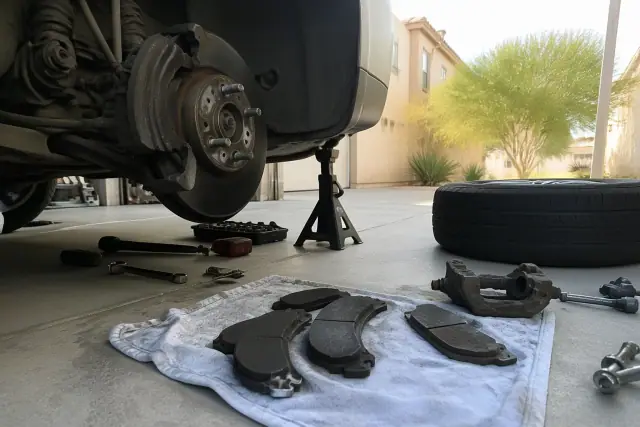
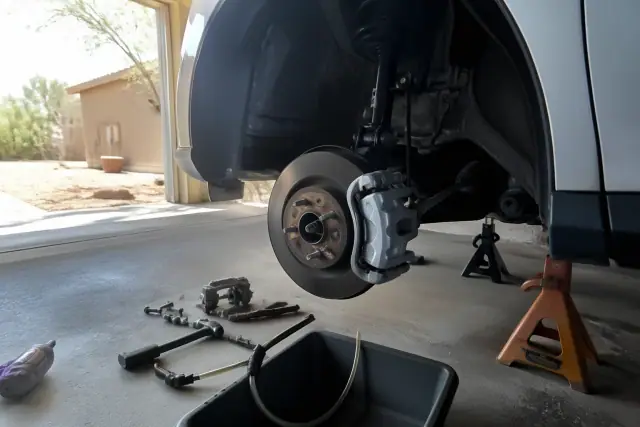
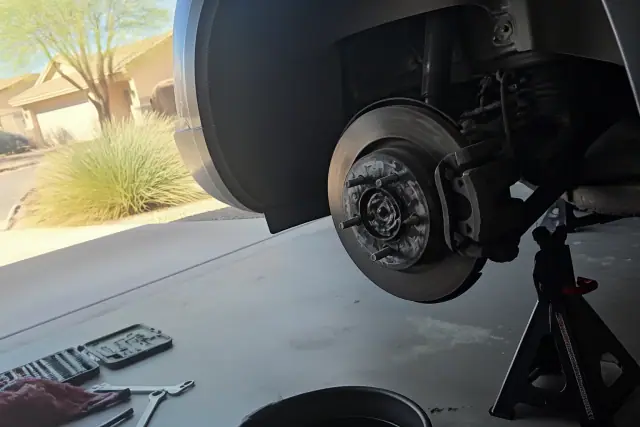
Car on jack stands with removed brake pads and tools in a residential garage in Phoenix, AZ.

Disc brake pads commonly last between 25,000 and 65,000 miles, but heavy Phoenix traffic can push wear toward the lower end. We inspect thickness and wear patterns, then match ceramic, semi-metallic, or organic pads to the vehicle weight and driving demands.

Request Estimate

Brake Rotor Service

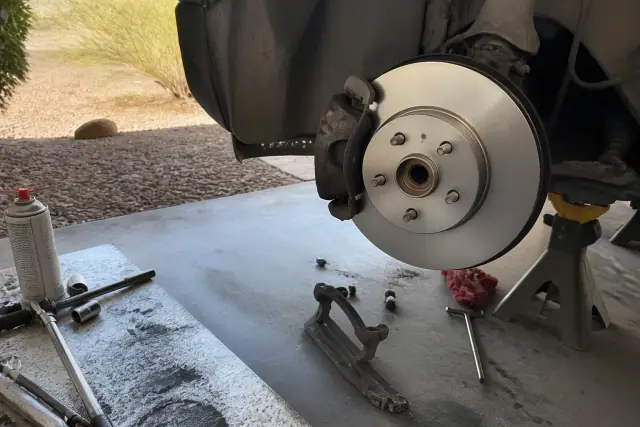
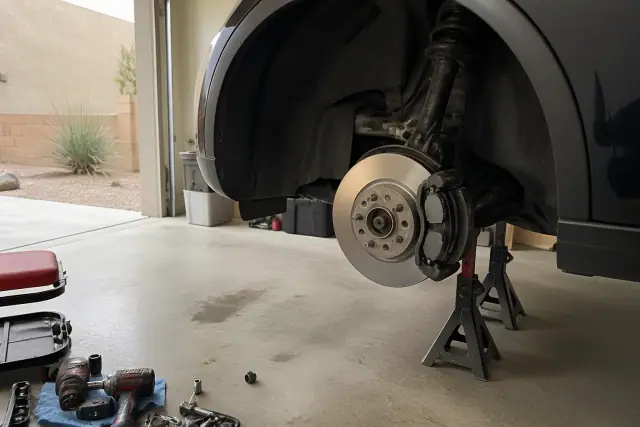
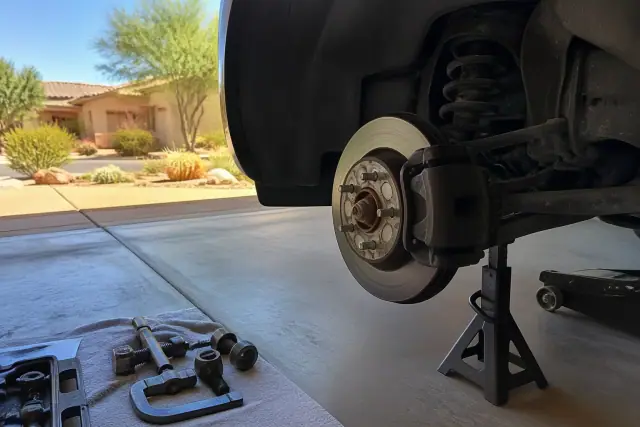
New brake rotor installed on a vehicle on jack stands in a residential garage in Phoenix, AZ.

A pulsing pedal or steering wheel can indicate rotor runout or heat damage. We measure thickness against the manufacturer's minimum specification and recommend resurfacing only when enough material remains; thin, cracked, deeply grooved, or heavily scored rotors need replacement.

Request Estimate

Brake Fluid Flush

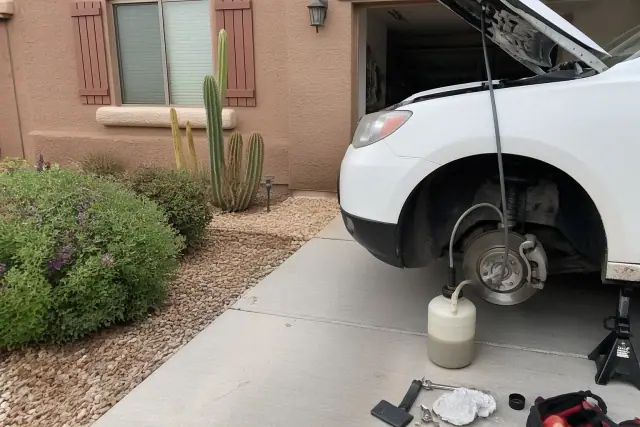
Brake fluid flush in progress on a car parked at a residential home in Phoenix, AZ.

Brake fluid absorbs moisture over time, lowering its boiling point and encouraging internal corrosion. We test fluid condition and use pressure bleeding to replace DOT 3 or DOT 4 fluid in the correct wheel sequence; those fluid standards are established under FMVSS 116, and most manufacturers recommend service every two to three years regardless of mileage.

Request Estimate

Brake Line and Hose Repair

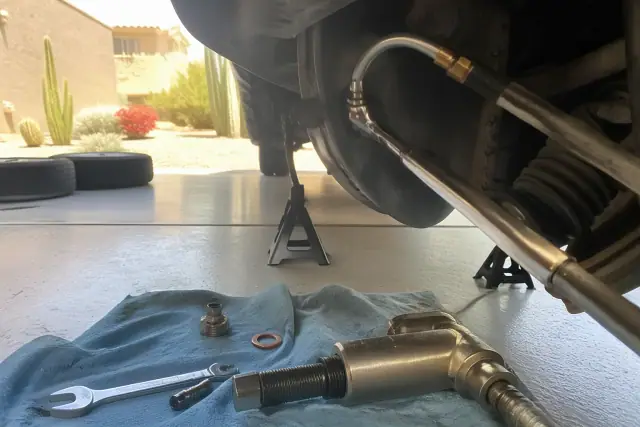
Brake line and hose repair in progress on a vehicle lifted by jack stands in a Phoenix, AZ residential garage.

Steel lines can corrode internally, while rubber hoses can crack or weep after heat, UV, ozone, road debris, or undercarriage damage. Visible fluid, a warning light, or a soft pedal calls for an inspection before a small leak becomes a major pressure loss.

Request Estimate

Brake Caliper Replacement

A car on jack stands undergoing brake caliper replacement in a residential garage in Phoenix, AZ.

A seized piston, leaking seal, worn slide pin, or dust-damaged boot can keep a caliper from applying evenly. We test movement and clamping action because a faulty caliper can ruin fresh pads within a few thousand miles and make the vehicle pull during braking.

Request Estimate

Booster and Master Cylinder Diagnosis

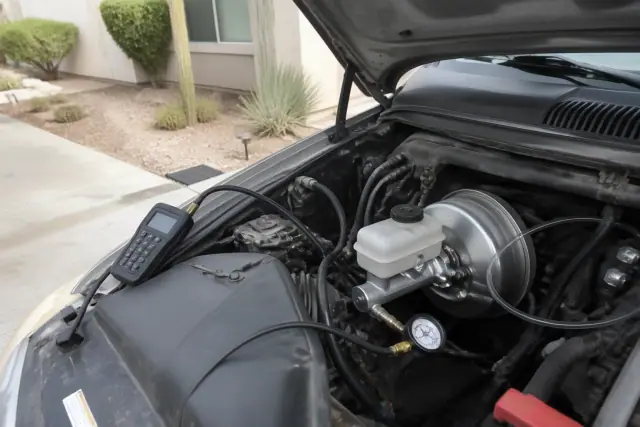
Technician diagnosing a brake master cylinder and booster in an engine bay at a home in Phoenix, AZ.

A hard, high-effort pedal can point to lost brake-booster assist, while a slowly sinking pedal can indicate internal master-cylinder seal wear. We test vacuum or hydraulic assist and system pressure before recommending replacement, then bleed the hydraulic system when the repair requires it.

Request Estimate
Brake System Options

Brake Component & Service Options

The correct repair depends on whether the issue is friction wear, rotor or drum damage, hydraulic pressure loss, or a control-related fault. These service categories show how we narrow the problem and select parts that fit the vehicle's original specifications.

Car on jack stands with removed wheel and new brake pads in a Phoenix, AZ garage.

Disc Brake Service

Disc brakes use pads and calipers to clamp a rotating rotor. We inspect the full assembly so new friction material is not installed over an unresolved rotor or caliper problem.

  • Pad thickness and wear-pattern measurements
  • Rotor thickness and runout checks
  • Caliper piston, seal, boot, and slide-pin inspection
  • Ceramic, semi-metallic, or organic pad selection
  • Solid, slotted, or drilled rotors when the original specification calls for them
Request Estimate
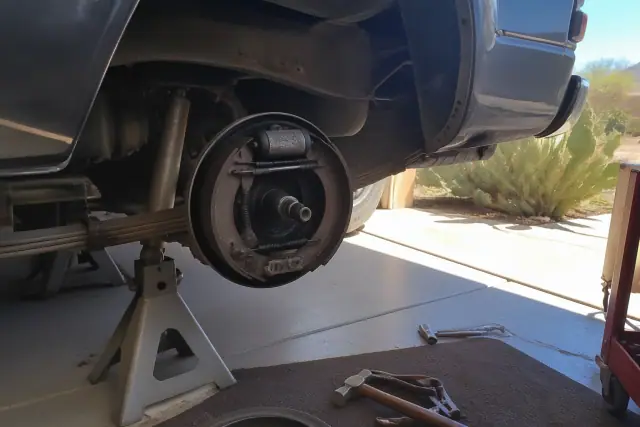
Mechanic performing drum brake service on a car elevated on jack stands in a garage in Phoenix, AZ.

Drum Brake Service

Drum assemblies rely on shoes, drums, hardware, and wheel cylinders that work together inside an enclosed housing. Fine desert dust and hydraulic leaks can affect operation, so the complete assembly needs inspection.

  • Brake shoe thickness and surface condition
  • Drum wear, scoring, and usable dimensions
  • Wheel-cylinder movement and leak checks
  • Hardware condition and even shoe contact
  • Correct bleeding after hydraulic work
Request Estimate
A car on jack stands in a Phoenix, AZ garage undergoing brake repair with the wheel removed and brake parts visible.

Hydraulic Brake Service

Hydraulic pressure carries pedal input through the master cylinder, lines, hoses, calipers, and wheel cylinders. A leak, trapped air, or failing seal can change pedal travel and reduce stopping force.

  • Master-cylinder pressure testing
  • Steel brake line and rubber hose inspection
  • Fluid color and moisture-condition checks
  • Pressure bleeding to remove old fluid and air
  • Proportioning-valve and pedal-travel assessment
Request Estimate
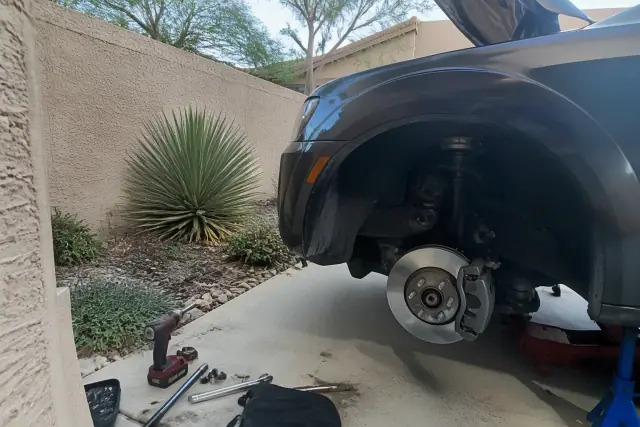
Vehicle on jack stands with brake tools in a Phoenix, AZ garage with desert landscaping visible in the background.

Brake Inspections and Diagnostics

A brake inspection replaces guesswork with measurements and system checks. It can separate normal pad wear from rotor damage, a hydraulic fault, a booster problem, or an early ABS-related concern.

  • Pad, shoe, rotor, and drum measurements
  • Caliper, wheel-cylinder, line, and hose checks
  • ABS and brake warning-light behavior
  • Pedal feel, travel, and booster assist
  • Even stopping performance across all four wheels
Request Estimate
Technician performing a mobile brake repair on a vehicle at a residential home in Phoenix, AZ.

On-Site Service for Drivers and Fleets

Mobile equipment makes brake work practical for more than one type of vehicle or appointment. We assess the vehicle where it is parked and plan the visit around access, parts, and the repair required.

  • Daily commuter sedans
  • Trucks used for towing
  • Fleet vehicles at one property
  • Multiple household vehicles in one visit
  • Home driveways and office parking locations
Request Estimate
Finding the Right Repair

Choosing the Right Brake Service Approach

Brake noise alone does not identify the complete repair. Pad thickness, rotor measurements, fluid condition, hydraulic pressure, component movement, warning lights, and pedal behavior determine whether the vehicle needs a wear-item replacement, a flush, a leak repair, or deeper diagnosis.

Measurements Before Recommendations

Digital calipers show pad and rotor wear against usable limits instead of relying on a quick visual guess. Documented measurements help explain what needs attention now and what remains serviceable.

Written Estimates Before Work

After the inspection, the estimate separates parts and labor before a bolt is removed. You can review the findings, ask questions, and approve the repair with a clear understanding of the proposed work.

Shop-Grade Tools at Your Location

The service vehicle carries digital measuring tools, pressure-bleeding equipment, brake-lathe capability, parts, and lifting equipment used for many common brake jobs. Technicians follow vehicle-specific torque specifications and service procedures during reassembly.

What Sets Us Apart

Why Choose Us for Mobile Brake Repair?

Phoenix Mobile Car Mechanic combines on-site convenience with a complete brake-condition assessment. We inspect before quoting, explain which components remain usable, and bring the tools needed to complete many repairs without moving the vehicle to a shop.

Request a Brake Inspection

Squealing or Grinding Brakes

Squealing under light braking often means a wear indicator is contacting the rotor. Grinding or scraping can mean the friction material is gone and metal is contacting metal, which can quickly damage the rotor.

Pulsing During Braking

A pulsing pedal or steering wheel can develop when repeated heat cycles create uneven rotor surfaces or runout. Extended downhill braking near South Mountain and repeated hard stops in hot conditions can increase this stress.

Soft or Sinking Pedal

A soft, spongy, or sinking pedal can point to air, a hydraulic leak, contaminated fluid, or a failing master cylinder. Because these faults can reduce system pressure, the vehicle should be inspected before regular driving continues.

Pulling to One Side

A vehicle that pulls while stopping may have a binding caliper, uneven pad wear, or unequal braking force. One wheel can overheat while the opposite side compensates, reducing balanced stopping performance.

Brake Warning Light

A brake or ABS warning light needs diagnosis rather than a parts guess. We check light behavior alongside fluid condition, pedal feel, visible wear, hydraulic components, and possible sensor faults.

Heat, Smoke, or Fluid Leaks

A burning smell, smoke from a wheel well, or fluid beneath the vehicle can signal a dragging brake or hydraulic leak. Stop driving and arrange an inspection rather than risking additional heat damage or pressure loss.

How It Works

Our Mobile Brake Repair Process

The process is designed to identify the cause, document the condition, and complete approved work at the vehicle when the location and repair allow it.

01.

Request On-Site Service

Call or book online, describe the vehicle and brake symptoms, and choose an available visit time. Early contact gives the team more time to confirm parts for urgent work.

02.

Review the Vehicle and Symptoms

The technician confirms the complaint at the location and reviews noises, pedal changes, warning lights, pulling, heat, or visible leaks before beginning the physical assessment.

03.

Complete the Brake Safety Inspection

Pads or shoes, rotors or drums, calipers or wheel cylinders, lines, hoses, fluid, pedal travel, and related warning-light behavior are checked to define the repair.

04.

Provide a Written Estimate

Measurements and findings are explained, then parts and labor are listed in writing. Work begins only after you understand and approve the recommended service.

05.

Perform the On-Site Repair

Approved components are repaired or replaced using the applicable service sequence, torque specifications, and bleeding procedure. Parts selection follows the vehicle specification and operating needs.

06.

Verify Braking Performance

After reassembly, the technician confirms pedal feel and checks that braking force is even. The completed work and any future maintenance needs are reviewed before the visit ends.

Get Brake Service

Schedule a Mobile
Brake
Inspection

Tell us what the vehicle is doing and where it is safely parked. We can arrange an inspection, confirm the brake condition, and provide a written estimate for the work the vehicle actually needs.

Brake Repair Help

Phoenix Brake Repair FAQs

These answers cover pricing, wear intervals, repair timing, warning signs, inspection details, and on-site service for Phoenix drivers.

Call About Brake Service

Brake repair in Phoenix typically runs $150 to $300 per axle for pads and rotors, or roughly $200 to $600 for a full four-wheel job, depending on the vehicle and parts. Valley labor rates generally fall between $120 and $160 per hour, with parts adding $200 or more on some vehicles. Catching a worn pad before it damages a rotor can keep a repair near $150 instead of roughly $400; a written estimate after inspection accounts for added issues such as calipers, lines, or the master cylinder.

Rotors generally last between 25,000 and 65,000 miles, although driving habits, pad compound, heat, towing, and terrain can move wear toward either end. We measure rotor thickness against the manufacturer's minimum specification rather than relying on mileage alone.

A standard pad and rotor replacement on one axle typically takes two to three hours after inspection and parts confirmation. A four-wheel job or fluid flush can take longer, but on-site service avoids waiting for a shop bay to open.

Brake-pad replacement requires the right lifting setup, tools, torque specifications, and experience servicing calipers and slide pins. Incorrect bolt torque, improper caliper seating, or an incomplete bleed after opening the hydraulic system can reduce stopping performance. Professional service is the safer choice if you cannot measure the rotor and reassemble the system to specification.

Phoenix drivers can use a fixed shop or schedule mobile brake repair at a safe home or office parking location. Phoenix Mobile Car Mechanic inspects the system on-site and can complete many common repairs without the drive-in, waiting-room, and pickup steps.

Common signs include squealing, grinding, a pulsing pedal or steering wheel, a soft or sinking pedal, pulling while stopping, or a brake warning light. A burning smell, wheel-well smoke, or visible fluid is urgent; stop driving and arrange an inspection.

Pad life varies with driving style, traffic, vehicle weight, pad compound, and terrain, so mileage is only a guide. Inspect pad thickness at every oil change instead of waiting for grinding, which can mean the pad material is already gone and the rotor is being damaged.

Most manufacturers recommend flushing DOT 3 or DOT 4 brake fluid every two to three years regardless of mileage. Testing fluid condition during brake service helps determine whether absorbed moisture and contamination make a flush due.

Resurfacing can correct minor runout only when the rotor will remain above the manufacturer's minimum thickness after material is removed. A thin, cracked, deeply grooved, or heavily scored rotor should be replaced.

A pedal that sinks to the floor, smoke from a wheel, a burning smell, a sudden warning light, or a strong pull while braking deserves urgent attention. Stop driving the vehicle and call for an inspection; same-day scheduling may be available when the schedule and parts availability allow.

A full inspection takes roughly 20 to 30 minutes and covers pad or shoe thickness, rotor or drum condition, calipers or wheel cylinders, lines, hoses, fluid, pedal feel, and warning-light behavior. Typical Phoenix commuters should have a complete inspection at least once a year, and more often when towing or driving mountain routes.

Pulling can result from a sticking caliper, uneven friction-material wear, or unequal braking force across the axle. An inspection checks component movement, wear patterns, heat, and hydraulic operation before parts are recommended.

Yes. When access, parts, and scheduling allow, fleet vehicles or multiple cars at one address can be serviced back-to-back during one visit. Each vehicle still receives its own inspection and repair estimate.