Proudly serving Phoenix, Glendale, Scottsdale, Tempe, Mesa, Chandler & surrounding areasCall or Text 24/7: 480-210-2603

Mobile Alternator Replacement & Electrical Charging System Repair in Phoenix, AZ

Phoenix Mobile Car Mechanic provides mobile alternator replacement throughout Phoenix, Arizona. We diagnose the entire charging system before replacing parts, using a digital multimeter and load tester to distinguish a failed alternator from a weak battery, corroded terminal, or belt-tensioner problem. Onsite service can include vehicle-specific alternator replacement, battery and starter testing, serpentine-belt inspection, and electrical connector checks. Our service vehicles carry OEM and quality remanufactured options for Toyota, Honda, Ford, Chevy, and most European and diesel platforms.

Phoenix summer heat can push under-hood temperatures past 160 degrees, accelerating wear on windings, diode plates, voltage regulators, and pulley bearings. Warning signs include a battery light, dimming headlights, slow cranking, repeated jump-starts, or whining and grinding near the alternator. Our licensed, bonded, and insured mobile operation brings ASE-recognized electrical-system training to your home, office, or roadside location. We confirm the fault and explain parts and labor before any replacement begins.

Most passenger-vehicle appointments take between one and two hours from diagnosis through road test, and same-day service may be available when your vehicle details are confirmed ahead of time.

Phoenix Mobile Car Mechanic provides mobile alternator replacement across Phoenix and the greater Phoenix metro, including Scottsdale, Tempe, Mesa, Chandler, and Glendale.

★ ★ ★ ★ ★4.9/5 Average Rating · 20+ Years of Experience · Thousands of Customers Helped · Licensed & Insured · Residential & Commercial

Mobile Alternator Replacement Benefits

What Is Mobile Alternator Replacement?

The alternator supplies electrical power while the engine runs and replenishes the battery after starting. Mobile replacement brings the diagnostic tools, correct part, and installation equipment to the vehicle instead of requiring a tow to a shop.

Because weak batteries, corroded terminals, faulty ground straps, damaged connectors, and slipping belts can resemble alternator failure, we test the charging system before recommending a new unit. That diagnosis helps keep a different electrical fault from being mistaken for a failed alternator.

Once failure is confirmed, the old unit is removed, a correctly matched alternator is installed, and the belt, wiring, and charging output are checked. The final idle-and-load test verifies that the repaired system is charging within the vehicle manufacturer's specification.

Benefits of Onsite Alternator Service

Onsite service keeps a disabled vehicle where it is while the charging system is diagnosed and repaired. You can see the testing process, review the part options, and receive a clear parts-and-labor breakdown before work starts.

  • No tow truck or towing fee
  • Avoid a half day or more in a shop waiting room
  • Service at your home, office, or roadside location
  • Digital multimeter and load-tester diagnosis
  • OEM and quality remanufactured part choices
  • Vehicle-specific part matching before arrival
  • Belt, tensioner, terminal, and wiring checks
  • Post-installation idle, load, and road testing
Charging System Services

Phoenix Alternator Replacement Services

Our onsite charging-system work covers the failure itself and the related components that can cause the same symptoms. Each appointment starts with testing so the recommended service reflects the vehicle's actual fault, access, electrical load, and part requirements.

Mobile and Same-Day Alternator Replacement

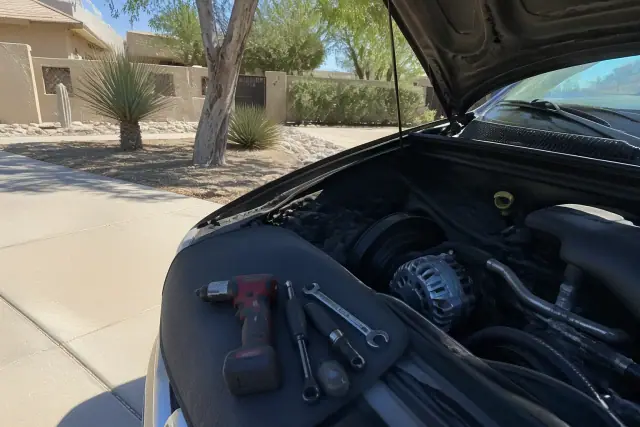
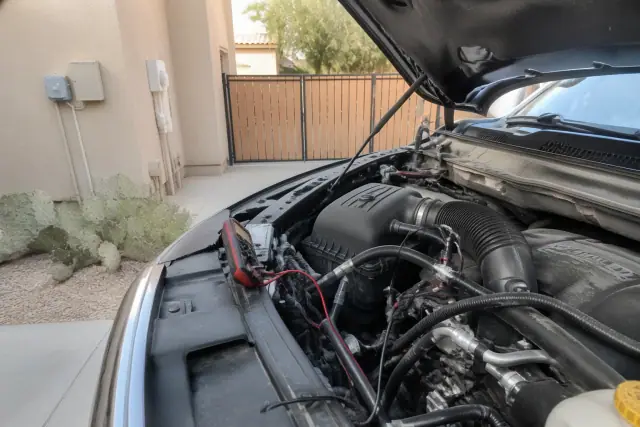
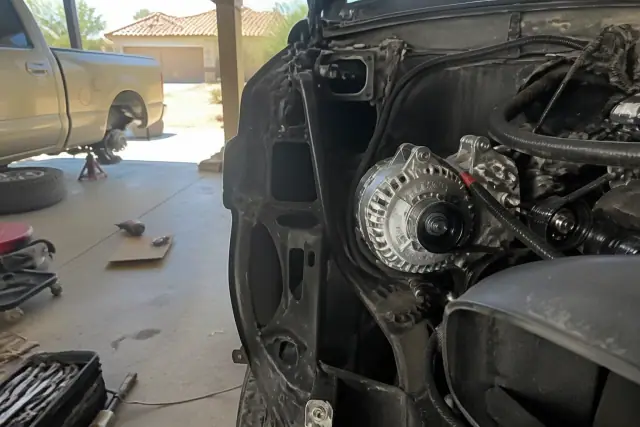
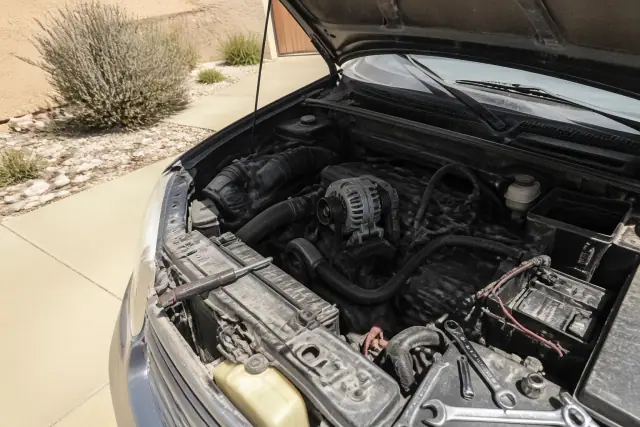
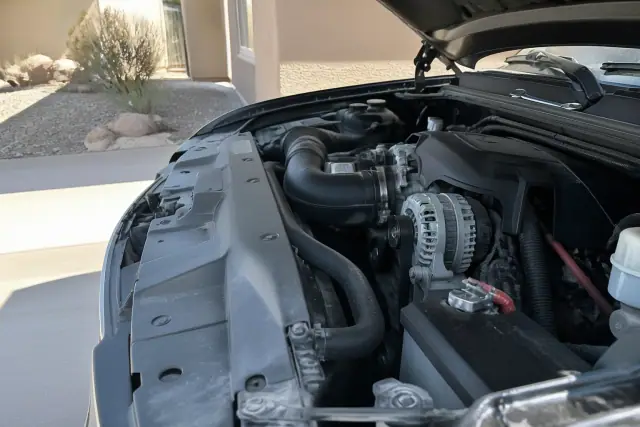
New alternator installed in a vehicle engine bay at a residence in Phoenix, AZ.

We replace confirmed failed alternators at homes, workplaces, job sites, and roadside locations. When the year, make, model, amperage rating, and pulley type are confirmed ahead of time, we can load the correct unit and may complete a same-day appointment in one visit.

Request Estimate

Charging System Diagnostics

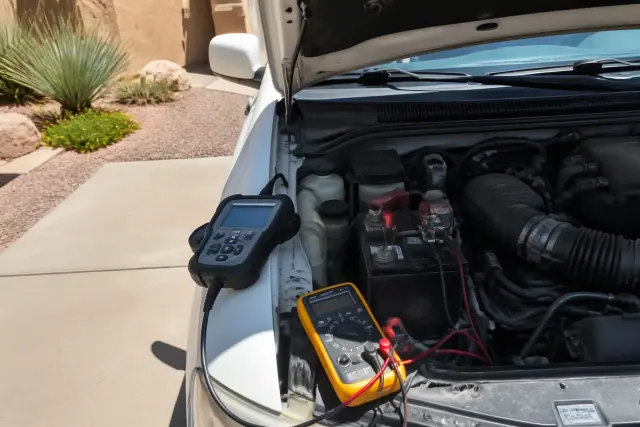
Technician performing alternator and battery diagnostic testing on a vehicle in a Phoenix, AZ driveway.

Battery load testing and charging-voltage measurements show whether the alternator is producing stable output at idle and under electrical load. We also check the voltage regulator, connector pins, grounds, and harness before recommending replacement.

Request Estimate

Battery and Starter Testing

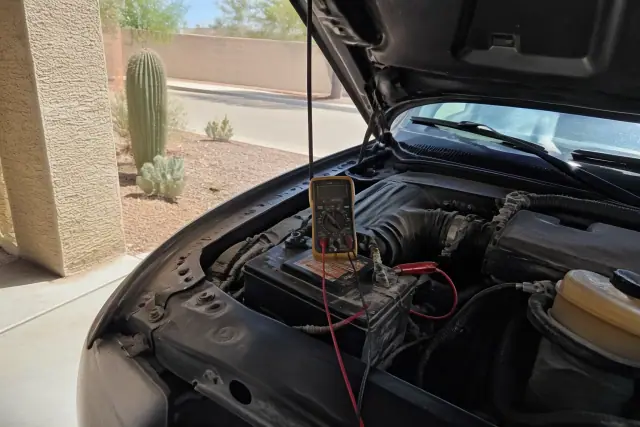
Technician testing a car battery with a multimeter under a residential carport in Phoenix, AZ.

A weak battery or starter can overlap with alternator symptoms, especially when the engine cranks slowly or needs repeated jumps. Testing those components first helps identify whether one part or several charging-and-starting components require attention.

Request Estimate

Belt and Tensioner Service

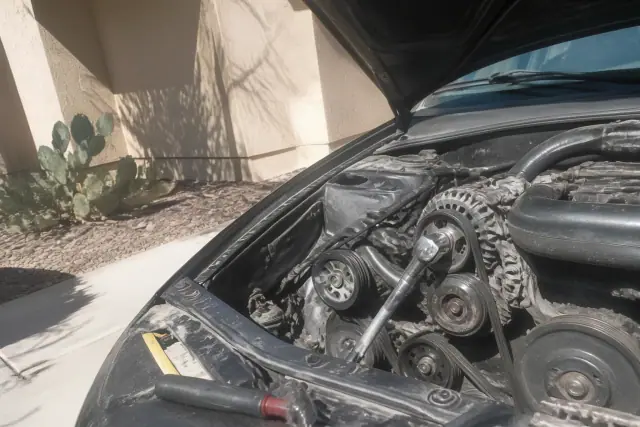
Serpentine belt and tensioner replacement on a vehicle in a residential driveway in Phoenix, AZ.

A glazed, cracked, or slipping serpentine belt can reduce alternator output and mimic unit failure. We inspect belt condition, tensioner pressure, and pulley alignment, then explain whether either component should be replaced with the alternator.

Request Estimate

Connector and Harness Inspection

Technician inspecting alternator wiring with a multimeter on a vehicle in a Phoenix, AZ driveway.

Corroded alternator connectors, loose ground straps, and heat-damaged or chafed wiring can create erratic voltage and warning lights. We inspect these points and carry common connectors, pulleys, and harness components needed for onsite electrical work.

Request Estimate

Fleet and Commercial Alternator Service

Mechanic installing a new alternator in a commercial vehicle at a job site in Phoenix, AZ.

Commercial trucks and vans can place heavier electrical loads on higher-output alternators, especially when work accessories or aftermarket wiring are installed. Mobile service at a job site or business lot keeps the vehicle from spending a full day out of rotation.

Request Estimate
Parts & Vehicle Options

Alternator Parts and Vehicle Options

The right replacement depends on amperage output, connector style, pulley type, mounting access, and the vehicle's electrical load. We explain the fit and price differences among OEM, quality remanufactured, standard-output, and high-output units before work begins.

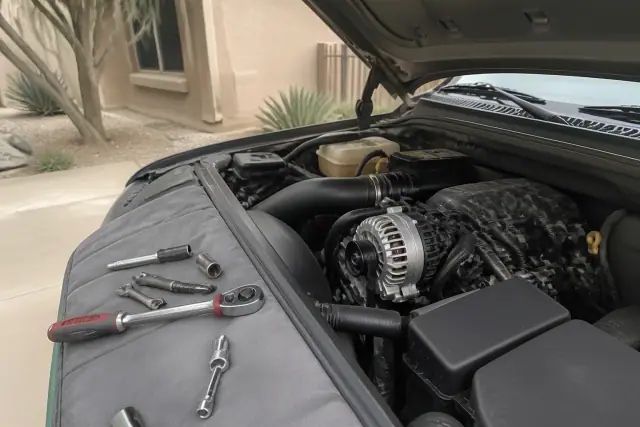
OEM alternator installed in a vehicle engine bay during a repair in a residential driveway in Phoenix, AZ.

OEM Alternators

An OEM alternator matches the vehicle's specified amperage output and connector type without modification. It costs more upfront, so we explain the price difference alongside the vehicle fit and how long you plan to keep the car.

  • Exact vehicle amperage specification
  • Matching factory connector type
  • Vehicle-specific pulley compatibility
  • Installation without connector modification
  • Higher upfront parts cost
Request Estimate
Technician installing a remanufactured alternator in a vehicle engine bay at a home in Phoenix, AZ.

Quality Remanufactured Alternators

A quality remanufactured alternator is rebuilt to meet original specifications and can provide a lower-cost option when sourced correctly. We still match amperage, connector, pulley, and mounting requirements before loading the part for your appointment.

  • Rebuilt to original specifications
  • Lower-cost alternative to OEM
  • Quality sourcing and compatibility checks
  • Correct amperage and connector match
  • Part choice reviewed before installation
Request Estimate
High-output truck and van alternator installed in a vehicle engine bay at a residential garage in Phoenix, AZ.

High-Output Truck and Van Alternators

Trucks, vans, and vehicles with heavy electrical loads may require a higher-output alternator than a standard passenger car. Added commercial accessories and aftermarket wiring must be checked against the new unit's output capacity.

  • Higher-amperage truck and van units
  • Heavy electrical-load compatibility
  • Upfitted accessory review
  • Aftermarket wiring capacity check
  • Mobile service at job sites and business lots
Request Estimate
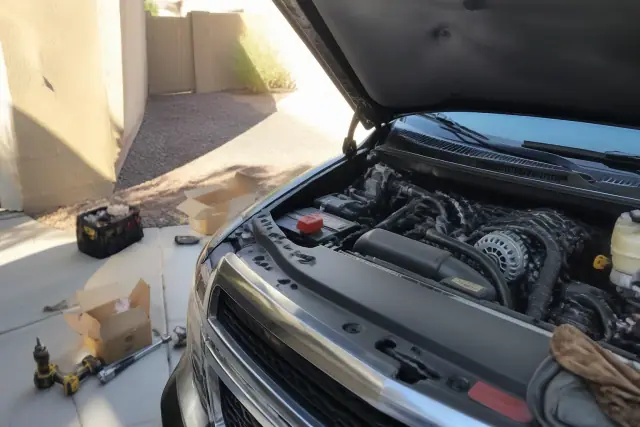
New alternator being installed in a vehicle engine bay at a residential driveway in Phoenix, AZ.

Toyota and Honda Alternator Service

Toyota and Honda alternators vary by model, year, amperage rating, connector, and charging specification. Phoenix-driven Toyota vehicles over eight years old can show regulator or pulley-bearing wear, while Honda connector corrosion can sometimes be cleaned and resealed without replacing the alternator.

  • Toyota model-and-year fitment
  • Corolla through Tundra output matching
  • Honda-specific charging-range testing
  • Civic, Accord, and CR-V compatibility
  • Connector corrosion inspection
Request Estimate
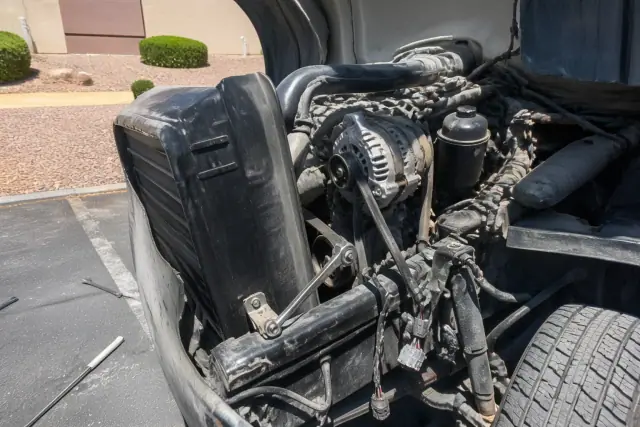
Completed alternator replacement on a vehicle engine in a residential driveway in Phoenix, AZ.

Ford and Chevy Alternator Service

Ford work trucks and vans may use higher-output units for added accessories, while Chevy models use different alternator mounting configurations. We check compatibility for common models and verify any added wiring before selecting the replacement.

  • Ford truck and van output requirements
  • Work-accessory wiring compatibility
  • Chevy mounting-configuration checks
  • Silverado, Malibu, and Equinox fitment
  • Common-model compatibility charts
Request Estimate
Finding Your Right Fit

Choosing the Right Alternator Replacement Approach

The right approach starts with confirming the failed component, then matching the replacement to the vehicle's amperage, connector, pulley, access, and electrical load. From there, you can compare OEM and quality remanufactured parts with a clear understanding of fit, price difference, and your plans for the vehicle.

Diagnosis Before Replacement

We load-test the battery, measure charging output, and inspect the belt, tensioner, wiring, connectors, and grounds before condemning the alternator. This process can uncover a simpler fault and avoids spending money on a part that was not the real problem.

Phoenix Heat and Dust Knowledge

Sustained under-hood heat, outdoor parking, dust, and repeated heat cycling can damage regulators, bearings, wiring, and connector surfaces. We inspect those Phoenix-specific wear points rather than treating every battery warning light as the same failure.

Vehicle-Specific Parts Matching

The replacement is selected using your year, make, model, amperage rating, pulley type, and connector style. Matching those details before arrival helps us bring a compatible alternator and the related components needed to complete the onsite work.

Charging-System Warning Signs

Alternator Problems We Diagnose

Alternator faults can appear as lighting, starting, noise, accessory, belt, or wiring problems. Our electrical-system testing separates a failed alternator from the overlapping battery, tensioner, ground, and connector issues that can produce the same symptoms.

Request Diagnostics

Battery Light and Dimming Headlights

A battery warning light, flickering dashboard, or headlights that dim at idle and brighten with engine speed can point to unstable alternator output. Testing shows whether the charging voltage falls below the vehicle's specification.

Slow Cranking and Repeated Jumps

A car that cranks slowly or needs a jump more than once in a week may not be receiving a full charge while it runs. A battery load test and alternator output test help identify whether the battery, alternator, or both are involved.

Whining or Grinding at the Pulley

Whining or grinding near the alternator can signal pulley or bearing wear. We listen for the noise, inspect pulley alignment and belt condition, and verify charging performance before deciding which component needs service.

Flickering Gauges and Resetting Radio

Erratic alternator output can make power windows move slowly, dashboard gauges flicker, or the radio reset. It can also trigger the check engine light because the engine control module monitors charging voltage.

Slipping Belt or Weak Tensioner

A slipping or glazed serpentine belt and weak tensioner can keep a working alternator from turning correctly. Belt-tension and pulley-alignment checks prevent that mechanical problem from being misdiagnosed as alternator failure.

Heat-Damaged Wiring and Connectors

Phoenix heat cycling and dust exposure can corrode connector pins or damage wiring insulation and grounds. Those faults can create the same warning light and voltage instability as a failing alternator, so the harness is part of the diagnosis.

How it works

Our Alternator Replacement Process

The appointment moves from vehicle identification and full-system diagnosis to part installation and verification. Each step checks for secondary battery, belt, connector, or wiring issues that could undermine a new alternator.

01.

Confirm Vehicle Details

Tell us the symptoms, service location, and vehicle year, make, and model. We use those details to identify the required amperage rating, pulley type, connector, and likely access before dispatch.

02.

Load-Test the Battery

The battery is tested first to determine whether it can hold up under load. This separates a weak battery from a charging fault and shows whether battery condition must be addressed alongside the alternator.

03.

Measure Charging Voltage

We measure output at idle and under electrical load, typically looking for 13.5 to 14.8 volts depending on the manufacturer's specification. Output outside the correct range is evaluated with the regulator, battery, and wiring results.

04.

Inspect Belt and Wiring

We check the serpentine belt, tensioner, pulley alignment, battery terminals, ground straps, connector pins, and harness. Cracking, glazing, corrosion, chafing, or heat damage is identified before the replacement is installed.

05.

Install the Correct Alternator

After disconnecting the negative battery terminal, we remove the belt, harness, connector, and mounting bolts. The matched alternator is installed to factory mounting-torque specifications, then the wiring and belt are reconnected with correct tensioner pressure.

06.

Verify Output and Road-Test

With the engine running, we confirm stable charging voltage at idle and under load. A final road test verifies that the warning signs are resolved and the charging system remains within the manufacturer's range.

Get Back on the Road

Schedule Mobile Alternator
Replacement
Service

Describe the warning signs and share your vehicle year, make, model, and Phoenix-area location. We will confirm the charging-system fault, explain the compatible part options, and provide a firm quote before replacement work begins.

Alternator Service Help

Alternator Replacement FAQs

These answers cover Phoenix alternator pricing, timing, warning signs, testing, parts, vehicle fit, and warranty questions. A charging-system diagnosis is still necessary because batteries, belts, connectors, and alternators can create overlapping symptoms.

Call Our Technicians

Alternator replacement typically runs roughly $700 to $1,075 including parts and labor, with labor alone often between $190 and $280. Some easily accessible passenger-vehicle alternators can be closer to $350 to $450 total. The final quote depends on amperage, access, OEM or remanufactured part choice, and whether the belt or tensioner also needs service.

Most passenger-vehicle jobs take between one and two hours from initial diagnosis through the final road test. Trucks, vans, and models with an alternator buried behind other engine components can take longer. We include pre- and post-installation charging tests in that process.

Alternators typically last between 80,000 and 150,000 miles under normal conditions, but sustained Phoenix heat can accelerate wear on windings, diode plates, regulators, and bearings. We often see earlier failure on vehicles over seven or eight years old that spend much of their time parked outdoors. Battery-terminal cleaning and belt inspection can help, although heat exposure remains a major local factor.

Phoenix Mobile Car Mechanic comes to homes, workplaces, job sites, and roadside locations in Phoenix, Scottsdale, Tempe, Mesa, Chandler, and Glendale. Diagnostic equipment and the matched alternator travel to the vehicle, so a tow and shop-counter wait are not required.

Common signs include a battery warning light, dim or flickering headlights, a flickering dashboard, slow cranking, repeated jump-starts, and whining or grinding near the alternator pulley. Slow power windows or a radio that resets can also point to erratic charging voltage. Testing is needed because a weak battery, belt, tensioner, or connector can cause similar symptoms.

We load-test the battery, then measure charging voltage at idle and under electrical load. Belt tension, pulley alignment, terminals, ground straps, connector pins, and harness condition are checked at the same time. Those results show whether the battery cannot hold a charge, the alternator cannot supply one, or another component is interrupting the system.

We typically look for 13.5 to 14.8 volts at idle and under load, depending on the vehicle manufacturer's specification. The correct target varies by charging-system design, so the reading is compared with the model-specific range rather than a single generic number.

Only when inspection shows cracking, glazing, wear, weak tensioner pressure, or poor pulley alignment. A worn belt can slip and imitate alternator failure, while a bad tensioner can strain a new unit. We inspect both and explain any related recommendation before installation.

OEM units cost more upfront and match the vehicle's specified amperage and connector without modification. A correctly sourced quality remanufactured unit is rebuilt to original specifications and can reduce parts cost. We explain the fit and price difference so you can choose based on your budget and plans for the vehicle.

Our service vehicles carry or source units for Toyota, Honda, Ford, Chevy, and most European and diesel platforms. Fitment still depends on the exact year, model, amperage rating, pulley, connector, and mounting configuration, so we confirm those details before arriving.

Yes. Too little voltage can leave the battery undercharged, while too much can overcharge it and stress sensitive electronics such as the engine control module. We test full-system voltage after installation to confirm the new unit is not placing excess strain on connected components.

Yes. Modern vehicles monitor charging voltage through the engine control module, so unstable output can trigger the check engine light. A bad ground strap or corroded alternator connector can create the same warning, which is why the harness and grounds are inspected with the alternator.

Parts and labor warranty terms can vary by the part manufacturer and vehicle type. Ask about the coverage that applies to your specific replacement when booking. We will explain what is covered before work begins.