Proudly serving Phoenix, Glendale, Scottsdale, Tempe, Mesa, Chandler & surrounding areasCall or Text 24/7: 480-210-2603

Mobile Auto Repair & Engine Diagnostic Services in Peoria, AZ

Phoenix Mobile Car Mechanic provides mobile auto diagnostics and repair throughout Peoria, Arizona. Our core work includes check engine light diagnostics, brake repair, and car battery replacement at your driveway, workplace, or roadside location. We also handle alternator and starter replacement, oil changes, AC service, and radiator or cooling-system repair. Spark plug and ignition coil replacement and pre-purchase inspections round out the services available to Peoria drivers.

Peoria summer pavement temperatures routinely climb past 150 degrees, while a parked vehicle's cabin can reach 180 degrees within an hour. That heat load can damage battery terminals, dry out serpentine belts, and stress sensors, ignition coils, radiators, and alternators. Long drives on Loop 101 and Loop 303 add summer idling and repeated heat-cycling to the strain. Mobile testing helps you understand the fault before risking another hot trip across the West Valley.

Call when your check engine light comes on or another vehicle system needs attention, and we will come to your Peoria driveway, office lot, or roadside location with an explanation and written estimate before repair work begins.

★ ★ ★ ★ ★4.9/5 Average Rating - 20+ Years of Experience - Peoria Mobile Mechanic Specialists - Residential & Commercial
Mobile Auto Services

Complete Automotive Services in Peoria, AZ

Peoria recorded 190,985 residents in the 2020 census and ranks ninth in Arizona by population and sixth by land area, so a mobile visit can save a long cross-city shop trip. From diagnostic scans to brake and cooling repairs, each appointment includes a verbal walkthrough of the findings and a written estimate before work starts. Drivers comparing another West Valley service area can review the separate Avondale, AZ page.

Check Engine Light Diagnostics

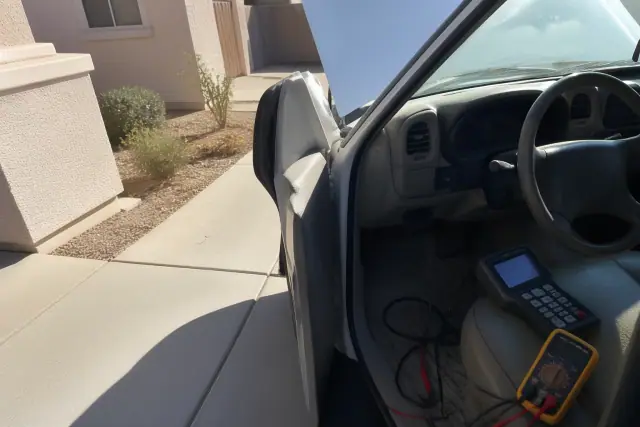
Diagnostic scanner and cables connected to a car under the dashboard in a Peoria, AZ driveway.

We retrieve stored and pending OBD-II codes, review freeze-frame information, and compare live sensor readings, fuel trims, and voltage data. Every 1996-and-newer vehicle sold in Arizona has an OBD-II port, but identifying the cause requires interpreting the data rather than reading a code alone.

Explore Service

Brake Repair

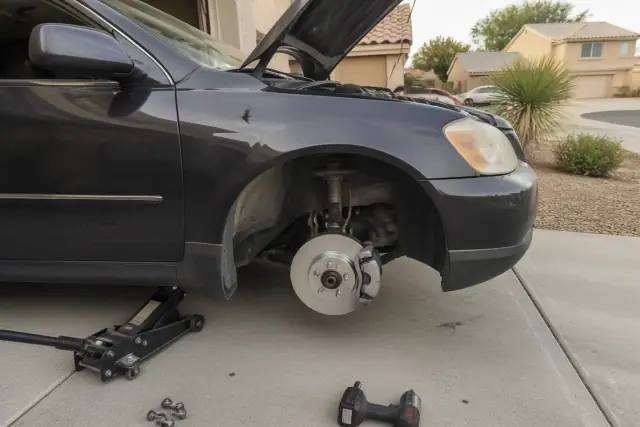
A vehicle with its wheel removed and new brake components installed during a mobile repair in a Peoria, AZ driveway.

Mobile brake service covers pad replacement, rotor resurfacing or replacement, caliper service, and brake-fluid flushes. Repairs are completed in your driveway with OEM-spec or better replacement parts.

Explore Service

Car Battery Replacement

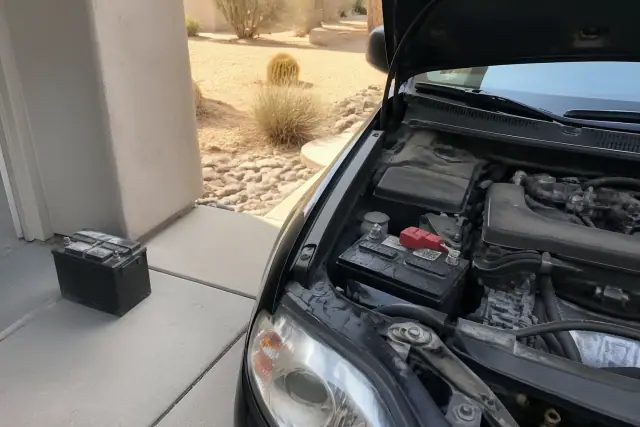
Car battery replacement service with a new battery installed in a vehicle engine bay at a home in Peoria, AZ.

Arizona heat can shorten battery life to roughly two to three years, compared with four to five years in milder climates. We test the battery, replace it curbside when needed, and properly recycle the old unit.

Explore Service

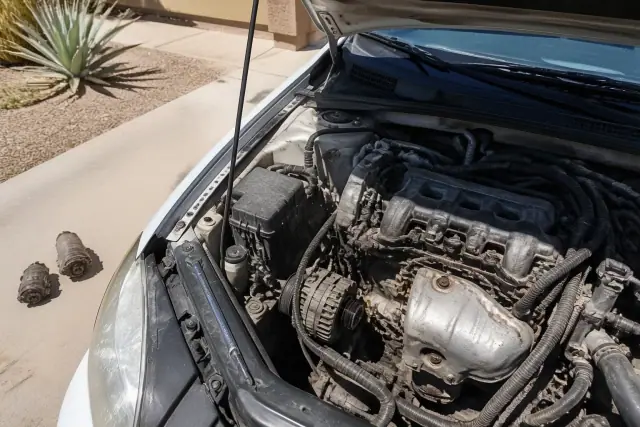
Alternator Replacement

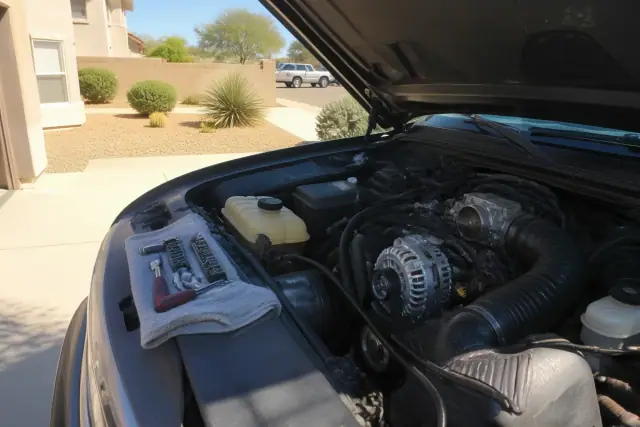
New alternator installed in a vehicle engine bay at a residence in Peoria, AZ.

Extreme heat can break down alternator insulation and lead to premature charging-system failure. We test charging output before installing a correctly rated OEM or OEM-equivalent replacement.

Starter Replacement

Mobile mechanic performing a starter replacement on a vehicle in a Peoria, AZ driveway.

Clicking, grinding, or a no-crank condition can point to the starter motor or solenoid. We diagnose the starting circuit and replace the failed starter on site when testing confirms the fault.

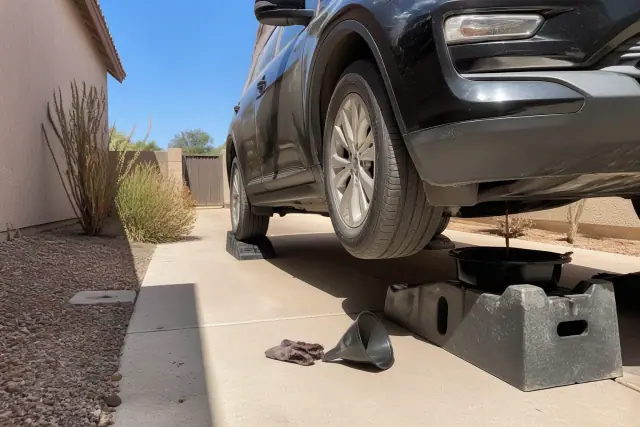
Oil Change

A mechanic performs an oil change on a car parked on ramps in a residential side yard in Peoria, AZ.

Choose conventional, synthetic-blend, or full-synthetic oil service at your home or workplace. We use the manufacturer-specified viscosity and filtration for your vehicle instead of a one-size-fits-all approach.

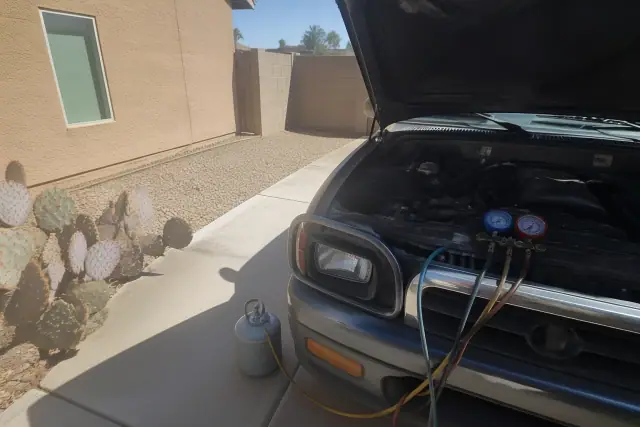
AC Repair & Recharge

Manifold gauges connected to an engine with an open hood for AC repair at a residential home in Peoria, AZ.

With summer highs regularly above 110 degrees, low refrigerant or a failed AC component needs a clear diagnosis. We check for leaks, replace supported components, and recharge the system to factory specification.

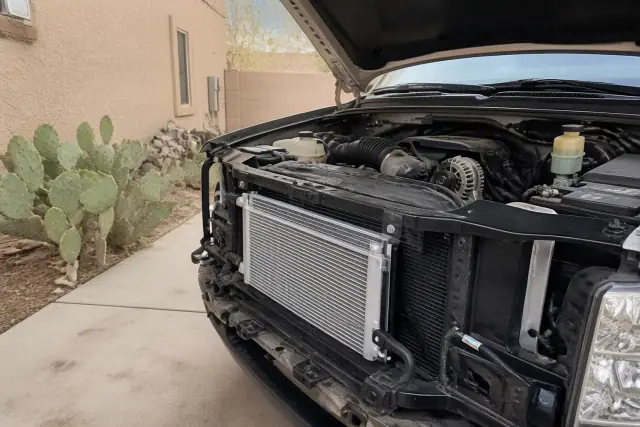
Radiator & Cooling System Repair

Engine bay with new cooling components under the hood of a car at a home in Peoria, AZ.

Desert heat and hard-water deposits can accelerate radiator and hose problems. Service may include pressure testing, radiator, hose, or thermostat replacement, and a coolant flush to prevent overheating and head-gasket damage.

Spark Plugs & Ignition Coil Replacement

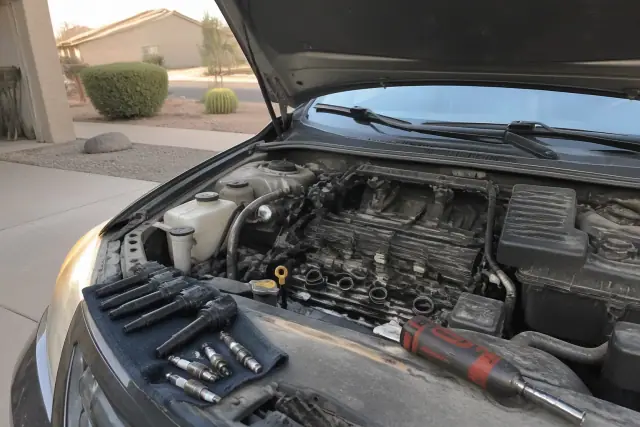
Mechanic replacing spark plugs and ignition coils on a vehicle in a driveway in Peoria, AZ.

Worn plugs and heat-damaged ignition coils can cause misfires, rough idle, and reduced fuel economy. We set replacement plugs to factory gap and torque specifications, test coils under load, and replace only failed units unless testing shows broader wear.

Pre-Purchase Car Inspection

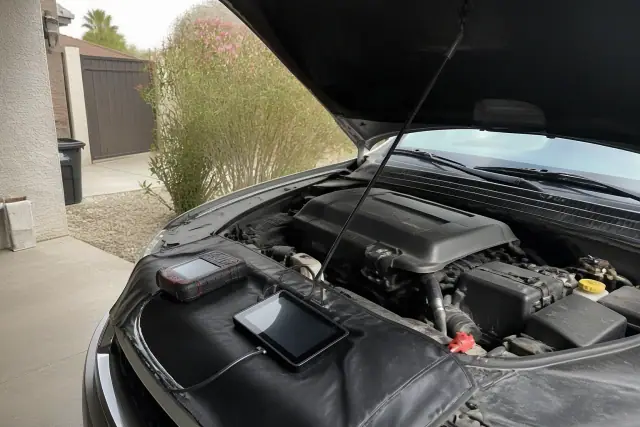
Pre-purchase car inspection with the hood open and diagnostic tools on a residential driveway in Peoria, AZ.

Before you buy a used vehicle, we complete a mechanical inspection, retrieve diagnostic codes, and check for signs of prior collision repair. You receive a written report that clarifies the vehicle's condition before you commit.

Choosing the Right Service

How to Choose Diagnostic and Repair Help in Peoria, AZ

The right starting point depends on the symptom, whether the vehicle is safe to move, and what testing the fault requires. A complete evaluation should connect the trouble code to physical inspection and live operating data before any part is recommended.

Full Diagnostic Evaluation

A basic parts-store scan reports a stored code, while a diagnostic evaluation tests the cause behind it. National data placed the average check-engine-related repair at a record $554 in 2025, up 33 percent from the prior year as labor costs rose 51 percent and replacement-parts costs rose 23 percent, making an accurate first diagnosis especially valuable.

On-Site Mobile Testing

We bring laptop-based diagnostic software, a professional OBD-II interface, and reference data to your home, workplace, or roadside location. Testing before driving is especially useful when a vehicle shows a misfire, overheating warning, or limp mode.

Live Data and Freeze-Frame Review

Freeze-frame data records conditions at the moment a fault set, while live readings show how sensors and fuel trims behave during testing. Comparing both helps separate a true component failure from a code caused by voltage, wiring, or another system.

Module and Network Diagnostics

Modern vehicles can contain 20 to 70 onboard modules. When a fault points beyond one sensor, we diagnose communication between the ECM, PCM, TCM, and body control modules along with related wiring.

Root-Cause Repair

A P0300 random-misfire code can come from spark plugs, ignition coils, a fuel injector, low compression, or a vacuum leak. Physical inspection and component testing help prevent replacing the easiest part to guess while leaving the actual fault unresolved.

Written Findings and Estimate

We explain each code, the tests performed, and the recommended correction before repair work begins. If testing uncovers a secondary issue, you can approve or decline the additional work after it is explained.

Peoria Vehicle Issues

Common Check Engine and Heat-Related Problems

An illuminated warning light can trace to emissions, ignition, airflow, charging, or cooling faults. Peoria heat and West Valley dust can create overlapping symptoms, so testing the affected system is more reliable than replacing parts from the code description alone.

Request Diagnostics

Loose or Failed Gas Cap

A cap that is loose, damaged, or no longer sealing can trigger an evaporative-emissions code. Inspection confirms whether the cap is the cause or whether the leak lies elsewhere in the system.

Oxygen Sensor or Catalyst Fault

A failing oxygen sensor or catalytic converter can set an emissions-related warning light, but the stored code does not always identify which part caused the condition. Sensor readings and related tests establish how the exhaust system is behaving before repair.

Spark Plug or Ignition Coil Misfire

Worn spark plugs and heat-damaged ignition coils can produce rough idle, reduced fuel economy, and a misfire code. Load testing the coils and inspecting the plugs identifies failed units without automatically replacing the full set.

Dust-Fouled Airflow Sensor

Dust and haboob activity in the West Valley can accelerate air-filter and mass-airflow-sensor fouling. Contamination may distort airflow readings, so the sensor and intake path need inspection before the code is cleared or a part is replaced.

Battery, Alternator, or Ground Fault

A weak battery, failing alternator, and corroded ground strap can create similar voltage-related codes. Testing battery condition, charging output, and the actual electrical connections separates those faults.

Cooling-System Overheating

Radiator, hose, thermostat, or cooling-fan problems can become dangerous quickly in desert heat. Pressure testing and bidirectional fan actuation help locate the fault before overheating damages the head gasket.

Why Choose Us

Why Choose Phoenix Mobile Car Mechanic in Peoria?

Our technicians combine industry-recognized training with mobile equipment and make-specific service information. The goal is a tested diagnosis, a clear explanation, and an approval decision before additional work begins.

ASE-Certified Technicians

Our technicians hold ASE certification through the National Institute for Automotive Service Excellence across engine repair, electrical systems, and heating and air conditioning. That third-party credential verifies automotive training in a state that does not require a mechanical-repair license.

Manufacturer-Specific Procedures

The code set and diagnostic path on a 2024 Toyota can differ meaningfully from a 2015 Ford. We use manufacturer-specific procedures, technical service bulletins, torque specifications, fluid capacities, and service intervals instead of generic shortcuts.

Same-Day Service When Parts Are Available

Most Peoria check-engine calls are diagnosed and, when the required parts are on hand, repaired the day we arrive. Service vehicles carry common batteries, spark plugs, ignition coils, and thermostats; special-order parts are quoted and scheduled for a return visit after arrival.

Simple Process

Our Mobile Diagnostic Process in Peoria

A methodical scan-and-test sequence connects the warning light to the actual vehicle condition. We gather the symptoms, inspect the system, explain the evidence, and move into repair only after you review the recommendation.

01.

Describe the Symptoms and Location

Tell us what the vehicle is doing and whether it is at your Peoria home, workplace, or roadside location. That information helps frame the first safety checks and the equipment needed for the visit.

02.

Connect the OBD-II Scan Tool

We connect a professional-grade interface to the data-link connector and establish communication with the vehicle. The tool reads both generic and manufacturer-specific information supported by the make and model.

03.

Retrieve Codes and Freeze-Frame Data

Stored and pending codes are collected alongside the freeze-frame snapshot saved when the fault occurred. We review the full code set before focusing on a single system or component.

04.

Test Live Data and Components

We compare live sensor values, fuel trims, and voltage readings with expected behavior. Bidirectional tool functions can actuate components such as fuel injectors and cooling fans to confirm a diagnosis.

05.

Review the Findings and Estimate

You receive an explanation of each relevant code, what testing found, and which repair is recommended. The written estimate is provided before work starts, including any special-order part that requires a return appointment.

06.

Repair and Re-Test the System

After approval, we complete supported on-site repairs, clear the relevant codes, and test the system again. Re-testing confirms whether the correction addressed the condition that triggered the warning light.

What Testing Reveals

Clear Diagnostic Outcomes for Peoria Drivers

Case Study 1: Misfire diagnosis: Code data, plug inspection, and coil testing can distinguish an ignition fault from fuel, compression, or vacuum-related causes.

Case Study 2: Voltage-fault isolation: Battery condition, alternator output, and ground connections are tested together so similar electrical symptoms lead to the right repair.

Case Study 3: Cooling-system confirmation: Pressure testing, temperature data, and fan actuation can narrow an overheating problem to the radiator, hose, thermostat, fan, or another supported component.

Mobile Service in Peoria

Schedule Mobile
Car Service
in Peoria

Tell us what the vehicle is doing and where it is parked in Peoria. We can bring diagnostic and repair equipment to your driveway, office lot, or roadside location and explain the findings before work begins.

Peoria Mobile Mechanic Help

FAQs About Mobile Auto Service in Peoria, AZ

These answers cover diagnostic scans, warning-light safety, common mobile repairs, inspection steps, and Peoria service coverage. Call if your vehicle's symptoms need an on-site evaluation.

Call Our Technicians

We retrieve stored and pending OBD-II codes, review freeze-frame data, and compare live sensor, fuel-trim, and voltage readings. The technician then tests the related system and explains the likely cause instead of treating the code description as the diagnosis.

Yes. We bring professional scan equipment and reference data to Peoria homes, workplaces, and roadside locations, which can avoid a tow or an unnecessary drive when the vehicle is in limp mode, misfiring, or overheating.

A steady light generally means the vehicle may be safe for short distances while you arrange diagnostics. A flashing light usually indicates an active misfire, so stop driving; continuing can damage the catalytic converter within a few miles.

The diagnostic process typically takes 30 to 60 minutes, depending on how many systems need to be checked. Multiple codes, intermittent symptoms, or a communication fault between modules can require broader testing.

No. A basic scan can identify a stored code, but it does not include live-data interpretation, physical inspection, or component testing needed to identify the root cause and recommend a repair.

Yes. Our professional tools read manufacturer-specific codes beyond the generic OBD-II set on makes such as Ford, GM, Toyota, and Honda, and can use bidirectional functions to command supported components during testing.

Most Peoria calls are diagnosed and, when the required parts are on hand, repaired the day we arrive. A special-order catalytic converter, alternator, or other vehicle-specific part is quoted and scheduled for a return visit after it arrives.

High heat accelerates battery wear and can damage terminals, so local battery life is often shorter than in mild climates. We test the battery and charging system before replacement to distinguish a weak battery from an alternator or connection problem.

We diagnose refrigerant leaks and failed AC components, replace supported parts, and recharge the system to factory specification. Testing determines whether low refrigerant or a component fault is responsible for poor cooling.

Driveway brake work includes pad replacement, rotor resurfacing or replacement, caliper service, and brake-fluid flushes. The recommended work depends on inspection of the braking components rather than one symptom alone.

We pressure-test the cooling system and can replace radiators, hoses, and thermostats or flush the coolant when supported by the diagnosis. Cooling-fan actuation and temperature data also help identify an overheating cause.

Not automatically. We test individual coils under load and replace the failed unit unless the results show widespread wear; replacement spark plugs are installed to the factory gap and torque specification.

The inspection covers the vehicle's mechanical condition, diagnostic codes, and signs of prior collision repair. You receive a written report to review before deciding whether to buy the used vehicle.

Peoria coverage includes Arrowhead Ranch, Vistancia, Trilogy at Vistancia, Fletcher Heights, Sunrise Mountain, Terramar, Rio Vista, Old Town Peoria, Lake Pleasant, and the area near Peoria Sports Complex. Scheduled service also extends to Glendale, Surprise, Sun City, Sun City West, El Mirage, Youngtown, and northwest Phoenix.

We factor the full diagnostic evaluation into the repair cost when you move forward with the recommended work, so you are not paying for diagnostics separately after the repair begins. You receive the findings and written estimate before authorizing the work.