$350-$1,100 Total
That range includes the starter, labor, and diagnostic work. Most sedans and light trucks fall closer to $400-$650.
Phoenix Mobile Car Mechanic typically sees Phoenix-area starter replacement totals of $350 to $1,100, with many sedans and light trucks landing between $400 and $650 for the part, labor, and diagnostic work. Vehicle design, starter choice, and access determine where a specific quote falls, while mobile replacement can avoid the added cost of a tow.
That range includes the starter, labor, and diagnostic work. Most sedans and light trucks fall closer to $400-$650.
An exposed starter is faster to replace than one behind intake or exhaust components. OEM, aftermarket, rebuilt, and used units also carry different prices and warranty expectations.
Testing should rule out a weak battery, charging problem, or bad ground before replacing the starter. A mobile diagnosis can also prevent an unnecessary tow.
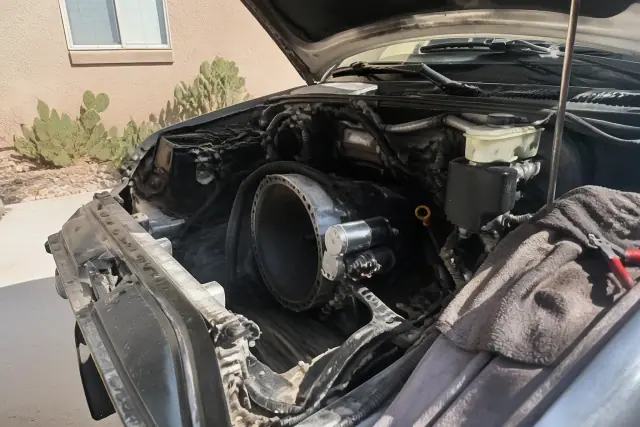
An exposed starter with clear bolt and wiring access. Straightforward access can keep hands-on work under an hour.
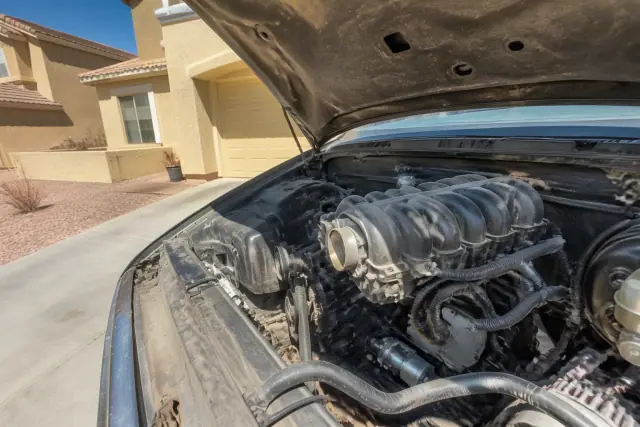
The components that must be removed before the starter is reachable. This access difference can turn a simple job into 2-4 hours of work.
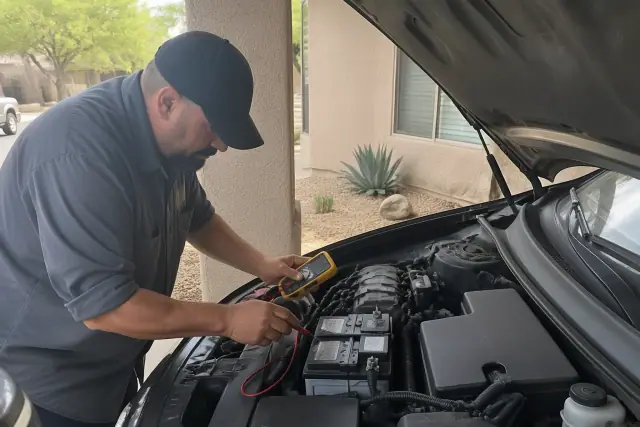
Voltage and charging-system testing before parts are removed. The check helps distinguish a failed starter from a weak battery, alternator issue, or poor ground.
$400-$650 is a fair total for many four- and six-cylinder vehicles when the starter is reasonably accessible, with on-site service potentially removing the tow expense.
$600-$900 is a useful comparison range for a traditional shop. Facility overhead and towing can widen the difference from a mobile quote.
Simple bolt-on replacements can take under 1 hour, most jobs take 1-2 hours, and the hardest limited-clearance engines can require up to 6 hours.
New OEM units run $150-$350, new aftermarket units $80-$180, rebuilt units $100-$200, and used units often under $100. Used starters have unknown remaining life and no warranty, while OEM units usually carry longer coverage.
| Cost Situation | Typical Range | Main Cost Driver |
|---|---|---|
| New aftermarket starter | $80-$180 for the part | Lower upfront part cost |
| New OEM starter | $150-$350 for the part | Higher part cost and usually longer warranty coverage |
| Rebuilt or remanufactured starter | $100-$200 for the part | Often $50-$150 less than a comparable new unit |
| Common mobile replacement | $400-$650 total | Vehicle access, diagnosis, part choice, and labor |
| Traditional shop comparison | $600-$900 total | Facility overhead plus parts and labor |
| Difficult-access replacement | $700-$1,100 total | Intake or exhaust components may need removal |
National starter-replacement estimates span $350-$1,100, and industry averages cluster around $728-$820, but those figures cover very different vehicles and access conditions. For many Phoenix-area sedans and light trucks, $400-$650 is the more useful planning range when the part, labor, and diagnosis are included. A mobile repair can stay within that range while avoiding a separate tow.
Starter location is often the biggest labor variable: an exposed unit may be a quick bolt-on job, while one behind an intake manifold or exhaust components can require 2-4 hours of removal work and push some V8 truck repairs past $800. One 2025 full-size-pickup estimate falls between $547 and $809 before tax, while comparable midsize sedans and compact SUVs are described around $400-$600. Part quality changes the quote too, and Phoenix engine bays may need cooling time before fasteners can be handled during 110-degree summer stretches. Solenoid and wiring-insulation failures are also seen more often from June through September.
A starter is usually worth replacing when the vehicle is otherwise mechanically sound because starters typically last 100,000-150,000 miles, or roughly 10 years, and the repair costs far less than replacing the vehicle. Most jobs take 1-2 hours, although intake or exhaust removal can take 2-4 hours and limited clearance can extend the work to 6 hours. Clicking, grinding, slow cranking, or no crank with the dash lights on can indicate a starter or solenoid problem, but the battery, alternator, and grounds should be tested first. DIY work can limit the initial expense to the $80-$350 part cost plus tools, but safe lifting, correct torque, and wiring reconnection matter, especially in Phoenix summer heat. Professional labor commonly totals about $150-$450 depending on access difficulty.
Share the vehicle year, make, model, exact starting symptom, and current location. A mobile mechanic can test the battery, charging system, grounds, and starter, then explain the part and labor scope before work begins.