Match the Interval to the Oil
A 5,000-mile interval is the safer default for conventional oil and severe use. A 10,000-mile interval belongs only to approved modern engines using the correct full synthetic oil under normal conditions.
At Phoenix Mobile Car Mechanic, we hear this question nearly every week from drivers across the Valley. Conventional oil generally belongs near 3,000 to 5,000 miles, while full synthetic can often run 7,500 to 10,000 miles when the owner's manual permits it; oil type, driving pattern, and Phoenix heat decide where your vehicle falls.
A 5,000-mile interval is the safer default for conventional oil and severe use. A 10,000-mile interval belongs only to approved modern engines using the correct full synthetic oil under normal conditions.
High heat accelerates oxidation, while city driving adds repeated heat cycles. Highway driving at steady speed is generally easier on oil than short trips, towing, delivery use, or dusty unpaved roads.
Manufacturer schedules in the source vary from 5,000 to 10,000 miles, with some centered around 7,500 miles or calculated by an oil life monitor. Confirm the guidance for your exact model year before extending the interval.
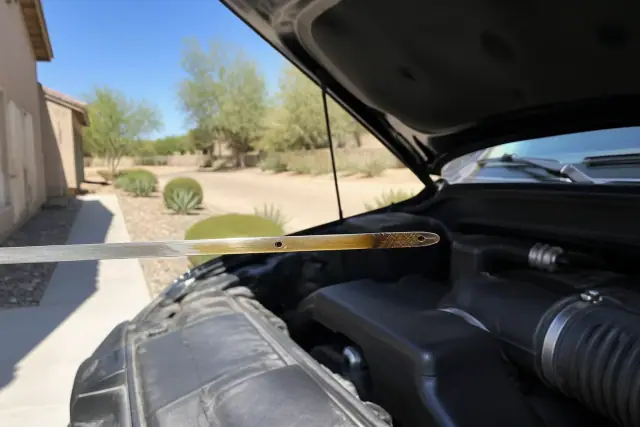
The dipstick being checked with the engine cold after it is wiped and fully reinserted. Translucent amber oil is healthy; opaque black or gritty oil supports changing it regardless of mileage.
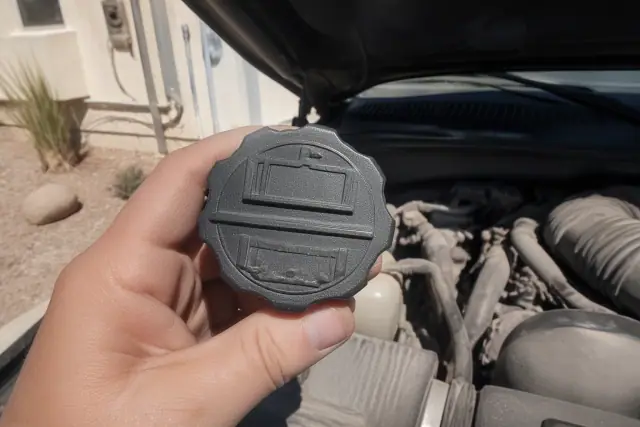
Where a driver finds a specification such as 0W-20 or 5W-30 on the oil cap or in the manual. The correct viscosity matters more than choosing an interval from a generic chart.
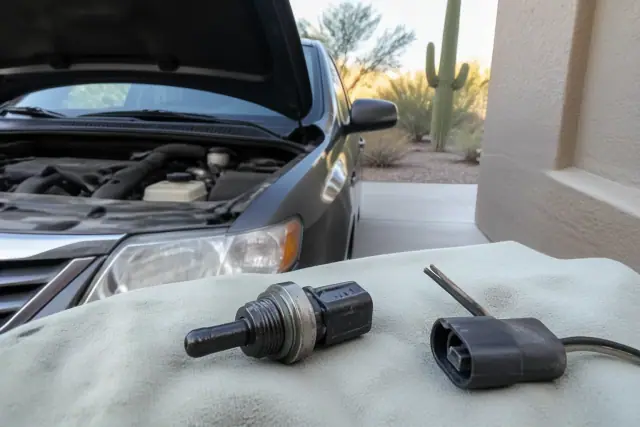
The manual's maintenance page beside the dashboard oil life reading. The manual sets the approved mileage, time, viscosity, and oil standard, while the monitor estimates wear from real driving data.
Check the oil cap, owner's manual, or door-jamb sticker for the exact specification. Many vehicles built after 2015 call for full synthetic, but the exact model-year guidance still controls.
Stop-and-go driving, towing, dust, extreme heat, and frequent short trips all increase oil stress. Vehicles past 75,000 to 100,000 miles may also burn oil faster and need closer level monitoring or a high-mileage formulation.
Change the oil sooner if it is gritty or opaque black, the engine grows louder or knocks at startup, fuel economy drops, a burnt-oil smell appears, or an oil-pressure warning illuminates. Do not wait for the mileage target when condition signals say the oil is due.
Do not push conventional oil to 10,000 miles, use the wrong viscosity, or treat a dashboard reset as approval for an extended interval. Delayed changes can promote oxidation, sludge, clogged passages, bearing wear, timing-chain wear, and maintenance-record problems with some warranty claims.
| Oil and Use | Typical Interval | What Makes It Fit |
|---|---|---|
| Conventional oil | 3,000 to 5,000 miles | Use the shorter protection window, especially under sustained heat. |
| Synthetic blend | 5,000 to 7,500 miles | Offers more oxidation resistance than conventional oil. |
| Full synthetic, severe use | Closer to 7,500 miles | City trips, towing, dust, and Phoenix heat favor the shorter end. |
| Full synthetic, normal use | Up to 10,000 miles or 12 months | Use only when the manual approves the interval and oil specification. |
| Time or condition override | Typically 6 to 12 months, or sooner | Follow the oil life monitor, time limit, or dipstick condition before mileage alone. |
A 10,000-mile interval is a conditional option, not a rule for every car. Full synthetic resists thermal breakdown better than conventional oil, which matters when Phoenix pavement and engine-bay temperatures climb well past 150°F. Extended intervals work only when three conditions align: the manufacturer approves them, the engine has the correct synthetic viscosity, and the driving pattern is not severe.
Steady highway miles can support the longer end of an approved range, while summer driving on I-17 or Loop 202, towing, idling, and short city trips favor the shorter end. A 10,000-mile interval requires approved full synthetic that meets the specified standard, such as API SN Plus or ILSAC GF-6, plus regular level checks. On multi-viscosity labels such as 0W-20 and 5W-30, the number before the W describes cold-flow performance and the number after it describes viscosity at operating temperature.
What does an oil change cost in Phoenix? Typical source ranges are $45 to $75 for conventional oil and $70 to $120 for full synthetic, with a new filter generally adding $15 to $45; filter parts alone commonly cost $10 to $20, while premium or original-equipment filters run higher. How long does mobile service take? A standard visit typically takes 30 to 45 minutes, depending on the vehicle and any additional fluid or component checks. Is DIY reasonable? It can save labor, but it still requires the correct drain-plug and filter torque plus proper used-oil disposal through a certified facility.
Phoenix Mobile Car Mechanic provides mobile oil changes at homes, offices, and apartment complexes across the Phoenix metro's 517.9 square miles. We confirm the vehicle's exact specification before arrival and include the correct oil grade, a new filter, and a basic fluid check at your location.