Typical Phoenix Price
Most single-code diagnoses land near $130 to $150. Premium or multiple-code cases can rise to $210 to $233.
A check engine light diagnosis in Phoenix typically costs $100 to $233, and Phoenix Mobile Car Mechanic explains that the final price depends on vehicle complexity, stored codes, and testing time. Understanding what the fee covers helps you separate a free code pull from a full diagnosis and avoid approving repairs based on a guess.
Most single-code diagnoses land near $130 to $150. Premium or multiple-code cases can rise to $210 to $233.
Vehicle complexity, intermittent faults, emissions-system testing, and three or four stored codes across different sensors can require more diagnostic time.
Note whether the light is steady or flashing, describe any rough idle, power loss, or unusual smell, and ask what testing the fee includes.
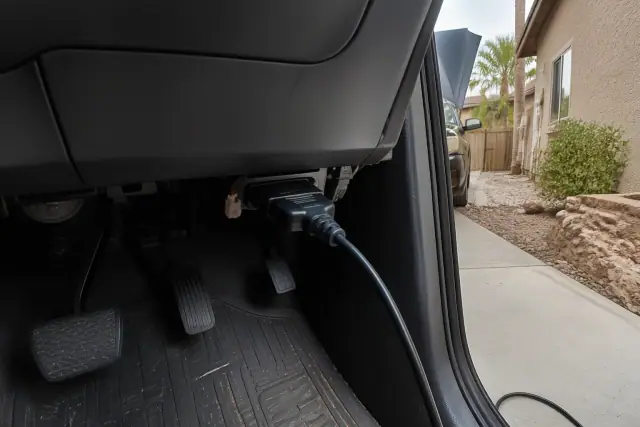
A scan tool connected to the vehicle's data port while the check engine light is visible. A code pull begins the diagnosis but does not finish it.
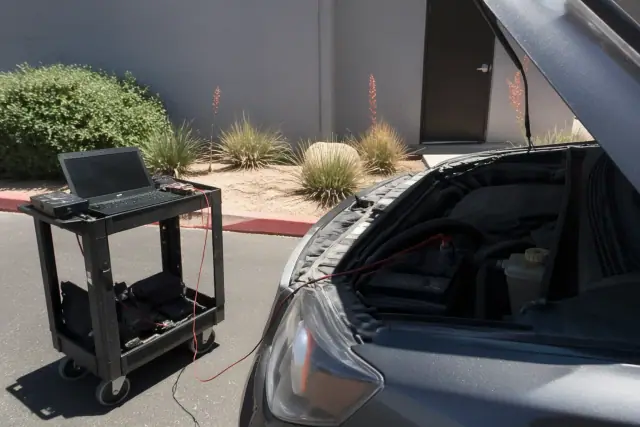
Contrast a basic code result with a technician reviewing freeze-frame data, live sensor readings, and related components. The second process looks for the actual failure point.
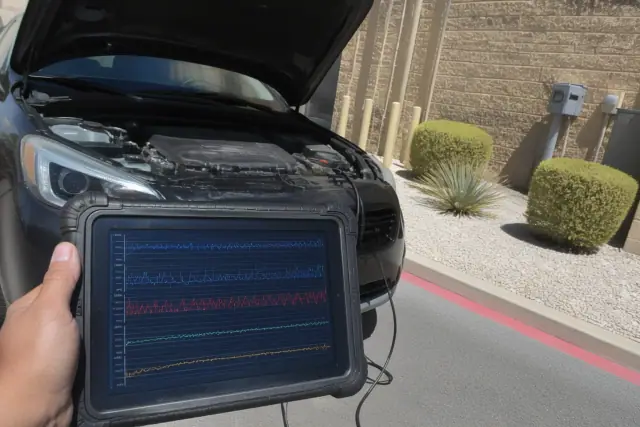
A technician at a Phoenix driveway reviewing live readings and related ignition components. This illustrates the testing behind a full mobile diagnosis.
Budget cases begin around $100, standard single-code diagnoses often land at $130 to $150, and more complex cases can reach $210 to $233.
Diagnostic labor generally runs $100 to $130 per hour. A simple case may take 30 to 60 minutes, while intermittent or multiple-code faults can take 1.5 hours or more.
A steady light can often wait for a prompt appointment if the car runs normally. A flashing light can signal a misfire that risks catalytic converter damage, so stop driving and seek diagnosis.
A free scan supplies a code number. Paid diagnosis adds freeze-frame data, live readings, physical inspection, interpretation, and component testing before a repair is recommended.
| Option | Typical Cost | What It Covers |
|---|---|---|
| Parts-store code pull | Free | Stored code number only; no root-cause testing. |
| Consumer OBD-II scanner | Under $100 to buy | Reads stored codes; interpretation and confirmation are separate. |
| Common independent diagnosis | $100 to $150 | Full diagnostic work commonly quoted in Phoenix. |
| National comparison range | $122 to $233 | A broad benchmark before vehicle-specific factors are considered. |
| Phoenix full range | $100 to $233 | Complexity and multiple or intermittent codes can push the fee higher. |
| Dealership diagnosis | $150 to $250 | Often higher because of facility overhead and factory-specific software. |
The fee pays for time to connect an OBD-II scan tool, retrieve stored codes, review freeze-frame and live sensor data, inspect related parts, and trace the actual fault. OBD-II has been federally standardized under the Clean Air Act since 1996, but a code remains a starting point rather than proof of a failed part. Diagnosis is separate from repair cost: a $130 diagnosis might reveal a $40 oxygen-sensor repair or a $600 catalytic-converter replacement, which is why testing before repair matters.
The final fee changes with vehicle complexity, the number of stored codes, whether a fault is intermittent, and whether emissions systems need extra testing. A single code on a common sedan is usually quicker than tracing three or four codes across several sensors; additional diagnostic hours typically add $100 per hour. One available Phoenix estimate for a 2025 full-size pickup placed diagnosis at $143 to $210. Local dry heat and long summer idling on I-10 and Loop 101 can also shape what technicians inspect in sensors, electrical components, and cooling systems.
Can you check it yourself? A consumer OBD-II scanner costs under $100 and can read codes, but it does not confirm the failed component. Can you drive with the light on? If it stays steady and the vehicle runs normally, drive cautiously and arrange service within a few days; if it flashes or comes with rough running, power loss, or unusual smells, stop driving because a misfire can damage the catalytic converter. Do you need a dealer? Independent and mobile technicians use OBD-II tools too, although a dealer may be necessary for manufacturer-specific recall software. Where is mobile diagnosis available? Service is offered across Phoenix, Chandler, Tempe, Glendale, Mesa, Peoria, and Scottsdale, including driveways and workplaces throughout the 517.9 square miles of Phoenix.
Share your vehicle details, symptoms, location, and whether the light is steady or flashing. A mobile technician can bring the appropriate scan tools to your Phoenix-area driveway or workplace, explain the findings, and outline repair costs separately. Same-day appointments may be available when the schedule allows.