Check Engine Light Means Automatic Failure
If the light remains illuminated when the vehicle is tested, Arizona's testing computer rejects it regardless of whether the stored fault seems minor.
Phoenix Mobile Car Mechanic gives Phoenix drivers a clear answer: no, a vehicle cannot pass an Arizona emissions test while the check engine light is illuminated. The light tells the OBD testing computer that a powertrain or emissions-control fault is present, so a diagnostic scan, repair, and completed readiness monitors are needed before testing. In Phoenix, home to 1.6 million residents, confirming test readiness before entering an emissions lane can prevent a rejected visit.
If the light remains illuminated when the vehicle is tested, Arizona's testing computer rejects it regardless of whether the stored fault seems minor.
The station checks MIL status, OBD communication, and whether enough readiness monitors have completed since the last code clear.
Diagnose the stored fault, complete the needed repair, then drive normally until a scan confirms the monitors are ready.
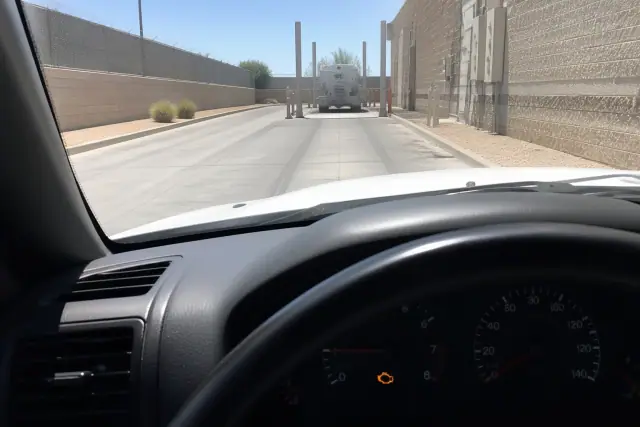
The dashboard light staying on while the vehicle is connected to emissions-test equipment. This is the condition that causes automatic rejection.
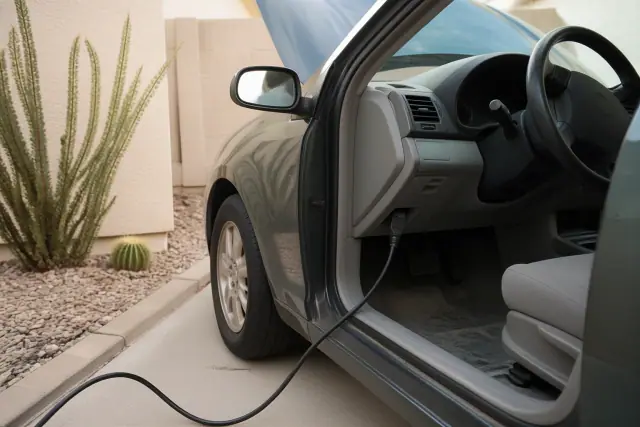
A scan tool displaying both the fault code and readiness results. The code identifies the repair direction, while the monitors show whether testing is premature.
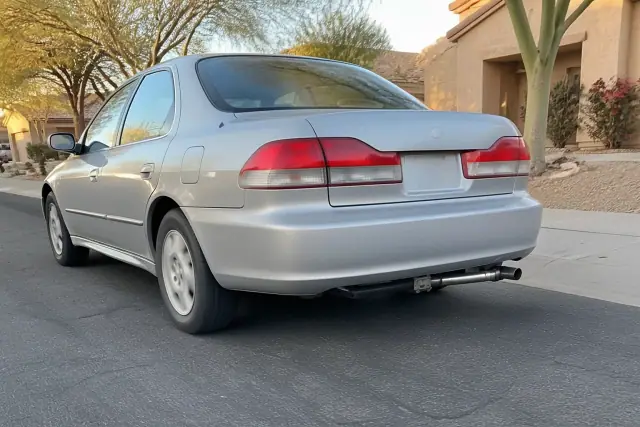
Normal city and highway driving after the fault has been repaired. A completed drive cycle lets the OBD monitors return to ready status before retesting.
A lit Malfunction Indicator Light prevents a passing result even when the underlying issue is a loose gas cap or another seemingly minor fault.
These vehicles are generally checked through the onboard diagnostics system and can be rejected for a lit light, incomplete monitors, or failed OBD communication.
OBD testing and IM147 tailpipe testing each cost $16.15, making a diagnostic check before the testing lane a practical step.
The Voluntary Vehicle Repair Program can pay up to $900 toward emissions-related repairs after a required test failure when the vehicle has been registered for at least a full year.
| Vehicle Status | Likely Test Result | Recommended Action |
|---|---|---|
| Check engine light on | Automatic rejection | Scan the OBD2 system and repair the stored fault. |
| Light off, monitors not ready | May still be rejected | Complete the required drive cycle, then scan again. |
| Light off, monitors ready | Ready for the testing lane | Proceed to an authorized testing lane. |
The Malfunction Indicator Light tells the testing computer that an emissions-control or powertrain value is out of range. Possible causes include an oxygen sensor, vacuum leak, loose gas cap, worn spark plugs or ignition coils, and catalytic-converter trouble. Common examples are P0300 for random or multiple-cylinder misfires, P0171 for a system running too lean, and P0505 for idle-control problems. The stored code must be diagnosed because the test result is the same whether the underlying repair is minor or expensive.
Start with a diagnostic scan and repair the specific fault instead of only clearing the code. Misfires may point to spark plugs or ignition coils, lean conditions may involve an oxygen sensor or vacuum leak, and converter-efficiency codes require the converter to be evaluated. A fresh air filter, correct tire pressure, and a healthy battery and alternator support stable sensor readings. Some single-code mobile repairs can be completed in one visit, but the monitors may still need several days of normal driving before a scan shows the vehicle is ready.
A light that turns off does not guarantee a pass because an intermittent fault or incomplete readiness monitors can still cause rejection. Driving 1,000 miles with the light on may be mechanically possible, but an unresolved misfire can damage the catalytic converter, so diagnosis should come before a long trip. Vehicles from 1966 and older and fully electric vehicles qualify for exemptions, hybrids are tested like gasoline vehicles, and diesels follow separate schedules and thresholds. In Maricopa and Pima counties, qualifying gasoline vehicles generally test on a biennial basis, while newer vehicles may have extended cycles.
A mobile engine diagnostic can identify the stored code and readiness status at a home, apartment, or workplace across the Salt River Valley, including near Sky Harbor and in the East and West valleys. Schedule a scan before visiting an Arizona Department of Environmental Quality testing lane so you know what needs repair and whether the vehicle is ready.